The Shirt Code — A Modern Gentleman's Field Guide Vol. 01 · Men's Formal Shirts Presented by Options Mall, Mumbai
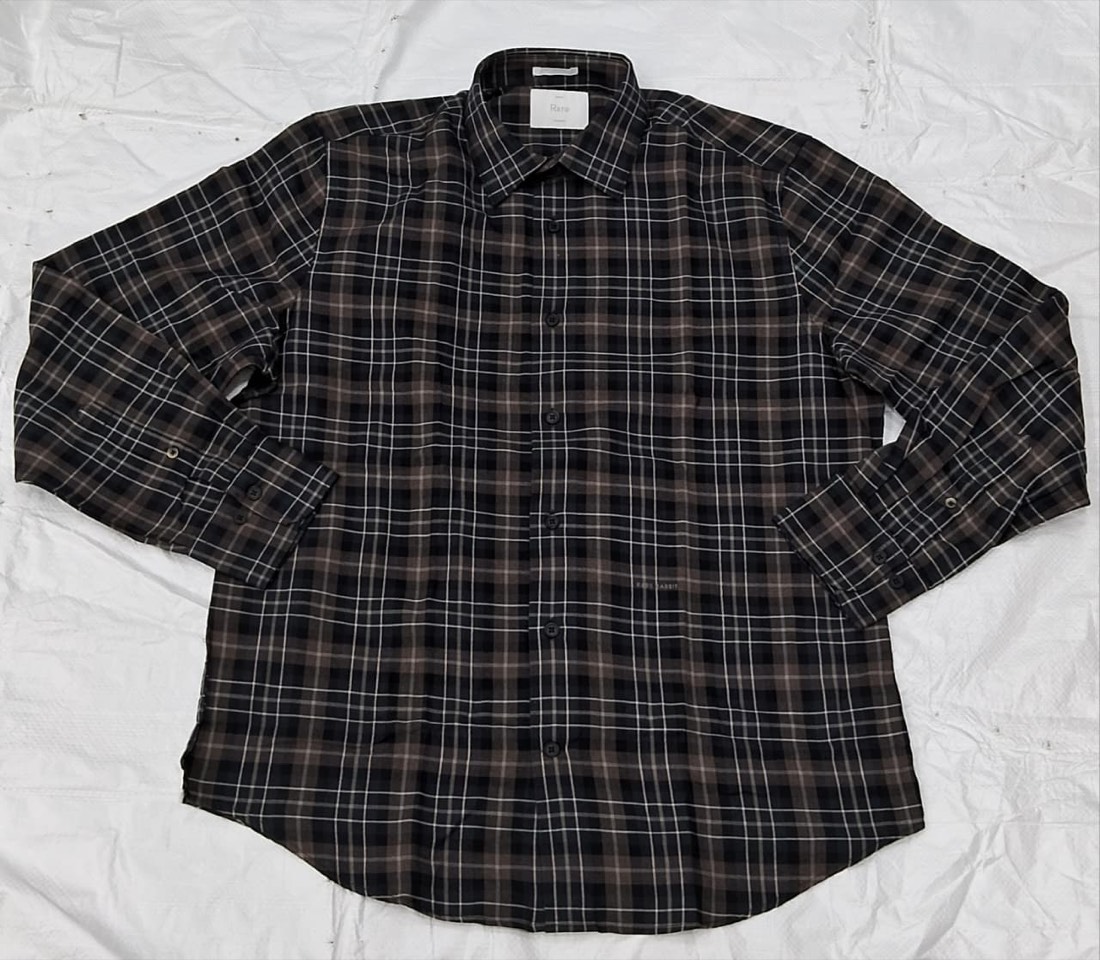
Charcoal long-sleeve shirt with a fine check laid flat
J/01 A fine check — the formal shirt's quieter modern face

J/01 · History6 min read

The evolution of the modern formal shirt

From a hidden linen undergarment to the centrepiece of professional dress — the shirt's history explains much of how we wear it today.

For centuries the shirt was underwear. Worn beneath doublets, waistcoats and coats, it protected expensive outer garments and could be washed far more easily. Only its collar and cuffs showed, and those small glimpses became the focus of display and status. A clean white shirt suggested a life away from manual labour.

The nineteenth century reshaped the garment. The detachable collar — credited to Hannah Lord Montague of Troy, New York, in 1827 — allowed men to change and launder collars separately. Later in the century, the shirt that opens all the way down the front like a coat (often traced to a design registered by Brown, Davis & Co. in Britain in 1871) began to replace the pullover shirt.

In the early twentieth century, softer attached collars gradually displaced stiff detachable ones, and by the 1920s and 30s they were standard. The button-down collar, introduced by Brooks Brothers in 1896, added a sporting alternative.

Through the twentieth century the shirt moved to the centre of working life. As jackets came off — first in warm climates and relaxed offices, later with the spread of business casual — the shirt became the outfit's main statement. That is why fit, fabric and detail matter so much now: nothing hides them.

Today's formal shirt draws on all of this history: the visible collar and cuffs, the full button front with its placket, and the expectation that the shirt looks finished on its own. Read the full history in The Journal →
J/02 · Collars5 min read

A guide to men's shirt collars

The collar frames the face and sets the formality of the whole shirt. Learn to read its spread, its points and its stand.

Grey shirt with a small dot pattern and a classic collar laid flat
J/02 A classic collar on a dot pattern

Every collar is defined by three things: its spread (how far apart the points sit), its point length and the height of the collar stand. A narrow spread with long points — the point collar — draws the eye downward and lengthens the face. A wide spread frames the face more broadly and makes room for a fuller tie knot.

Between those extremes sit the collars most men wear daily. The classic collar has a moderate spread and is the default on many office shirts. The semi-spread opens slightly further and looks equally good with or without a tie, which is why it has become so popular in contemporary formal shirts.

The statement collars

The spread and cutaway collars push the points outward. They look assured with suits and pair naturally with half-Windsor and Windsor knots. The cutaway, whose points sweep almost horizontally, is the boldest of all.

The relaxed collars

The button-down fastens its points to the shirt front. Introduced by Brooks Brothers in 1896 after polo players' collars, it has a sporting character and is ideal for smart casual and travel. The club collar, with rounded points, offers a vintage alternative.

To choose: consider your face shape, the tie knots you wear and how often you go without a tie. Then let the collar lead. See the illustrated Collar Guide →

J/03 · Fit6 min read

Understanding formal shirt fit

A well-fitted shirt looks more expensive than it is. A poorly fitted one undermines even the finest fabric.

Fit starts at the shoulders. The shoulder seam should land at the edge of your shoulder bone; it is the hardest part of a shirt to alter, so it should be the first thing you check. Next is the collar, which should button comfortably with room for one or two fingers.

Across the chest, look for clean fabric. Horizontal strain lines or gaps between buttons mean the shirt is too tight; loose, ballooning folds mean it's too big. The sleeves should end at the wrist with your arms relaxed, the cuff sitting at the wrist bone.

Choosing a silhouette

Shirts are commonly offered in slim, tailored, regular and relaxed fits. Slim is close and tapered; tailored is gently shaped; regular is straight with comfortable ease; relaxed is generous and casual. Names vary between makers, so treat them as starting points and always try shirts on.

Finally, move. Reach forward, raise your arms and sit down. A shirt that strains across the back or pulls out of your trousers is not the right fit, however good it looks standing still. Work through the full Fit Manual →

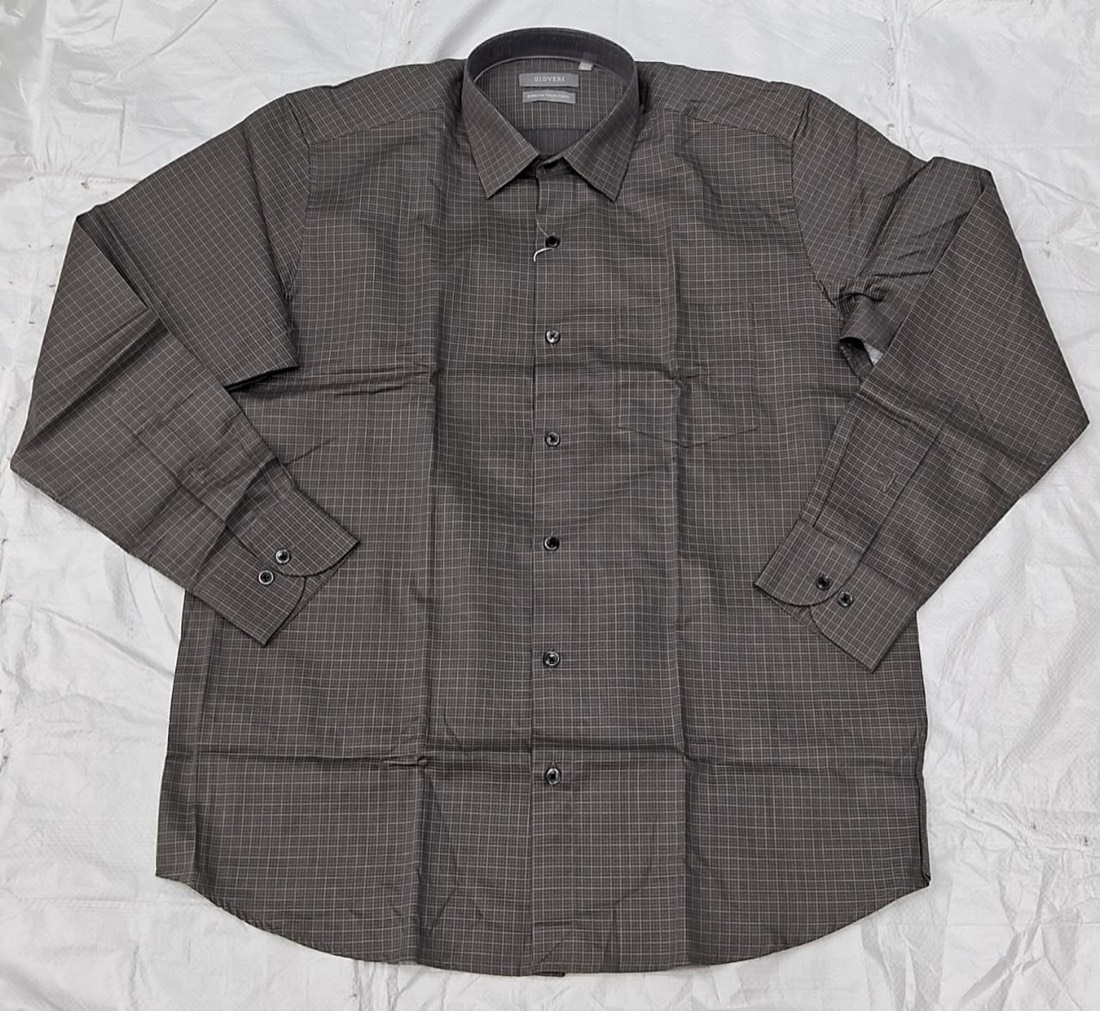
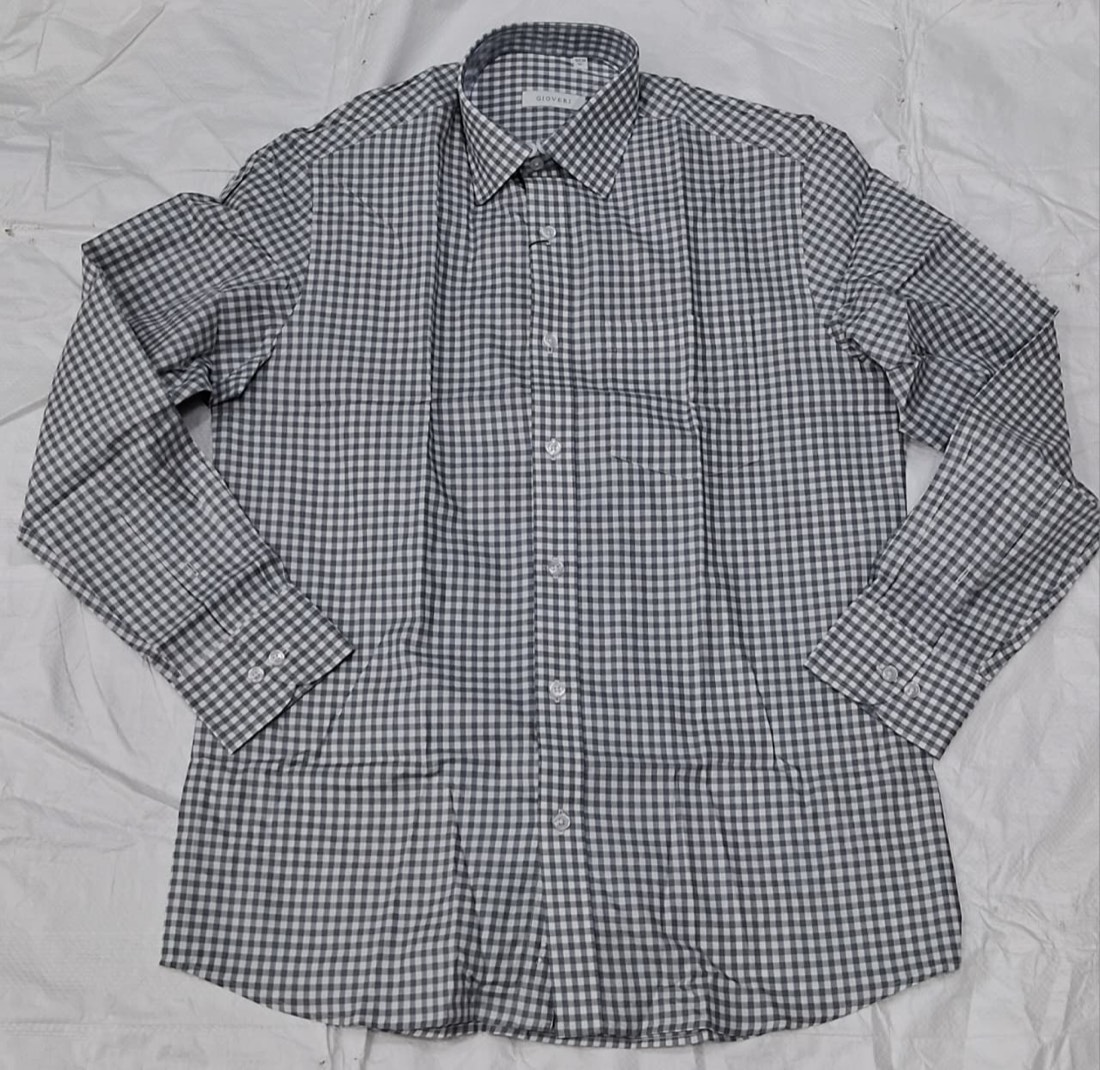
Grey and white gingham long-sleeve shirt laid flat showing straight check lines
J/03 Gingham reveals fit — the lines should run straight

J/04 · Colour5 min read

How shirt colours influence professional dressing

Colour is read before anything else. Choose it with the room, the jacket and your complexion in mind.

White is the most formal shirt colour and works with every suit. Light blue is close behind: calm, flattering on most complexions and perhaps the most versatile office colour of all. Together they form the foundation of a business wardrobe.

Pale pink and lilac add warmth and confidence, and pair particularly well with navy and grey. Cream is softer than white and sits beautifully with browns, olives and beiges. Grey is understated and modern.

Darker shirts — navy, maroon, forest green, charcoal — read as less formal in daytime business settings but are excellent for evenings and smart casual, especially worn open-necked under a lighter jacket.

A practical rule: the shirt is usually lighter than the jacket, and the tie usually darker than the shirt. Contrast reads as sharp; tone-on-tone reads as softer and more fashion-led.

Navy shirt with a subtle check pattern laid flat
J/04 Navy — a darker shirt for evenings and smart casual

J/05 · Wardrobe6 min read

Building a versatile business wardrobe

A handful of well-chosen shirts can cover nearly every professional situation — if they're chosen to work together.

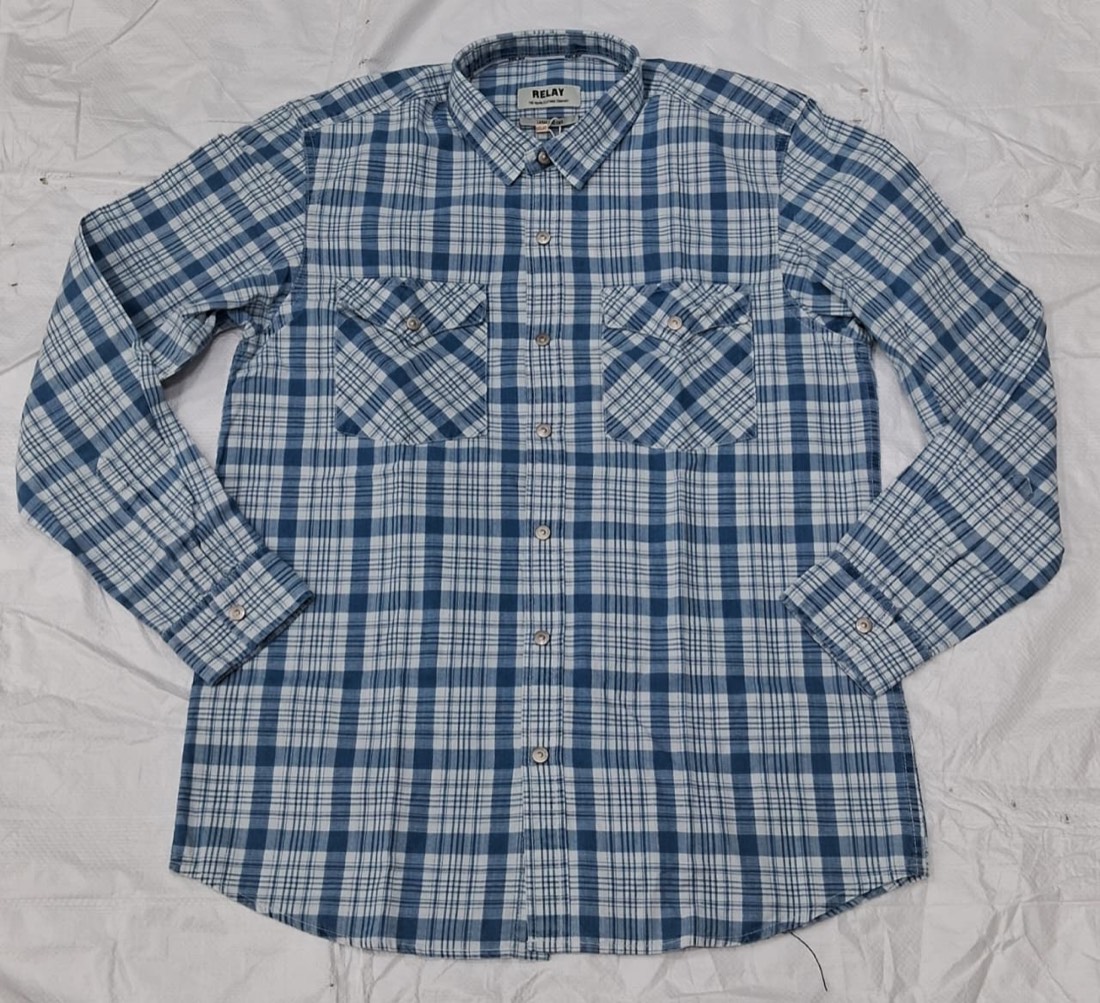
Blue and white check shirt laid flat
J/05.a Blue check — the workhorse pattern
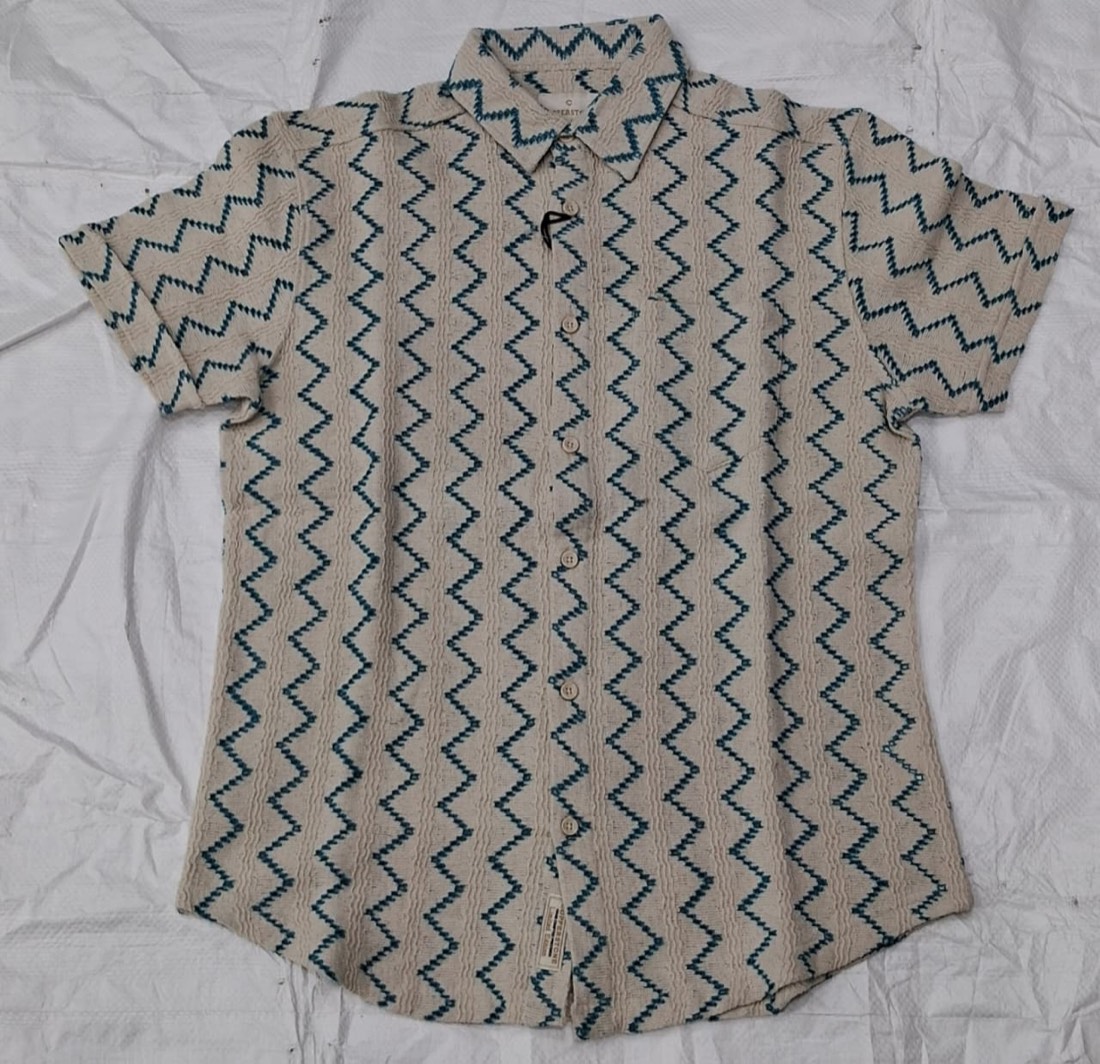
Short-sleeve shirt with a beige and teal zigzag pattern laid flat
J/05.b A short-sleeve print — for weekends, not the boardroom

Start with the essentials: shirts in white and light blue, in a smooth finish with a classic or semi-spread collar. These cover interviews, meetings, ceremonies and everyday suits.

Next, add pattern in small doses — a fine stripe and a small check, ideally in blue tones that echo the solids. These bring variety to the working week while staying completely office-appropriate.

Then introduce colour and texture: a pale pink or lilac shirt, a textured or deeper solid for days without a tie, and a button-down for travel and smart casual.

Finally, allow one or two expressive pieces: a subtle print for dinners and events, or a bolder check for weekends. Short-sleeved shirts belong here too — practical in heat, but kept for informal occasions.

The coordination test

Before adding a shirt, ask whether it works with at least two pairs of trousers and one jacket you already own. If it does, it earns its place. If it only works with one outfit, it's a luxury rather than a foundation.

  • Foundation: white, light blue — smooth, classic collar
  • Pattern: fine stripe, small check
  • Colour & texture: pastel, deeper solid, button-down
  • Expression: subtle print, bolder check

J/06 · Details5 min read

The importance of cuff and collar details

Collar and cuffs were once the only visible parts of a shirt. They are still where people look first.

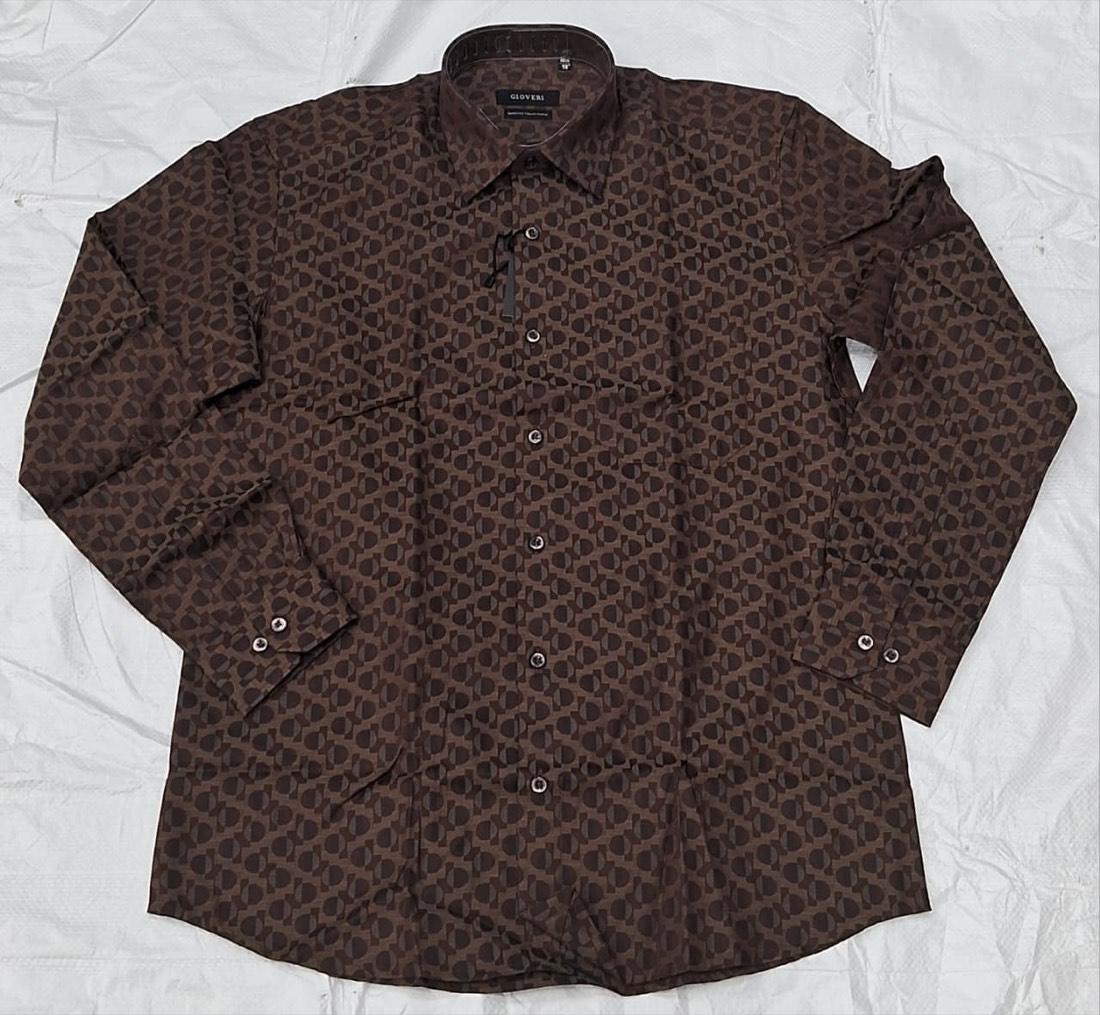
Brown long-sleeve shirt with a small geometric pattern laid flat
J/06 Collar and cuffs frame even a busy pattern

The collar sits beside the face and the cuffs beside the hands — the two places people look during a conversation. That's why these details carry so much weight. A collar that lies flat, with sharp, symmetrical points, makes a shirt look cared for. One that curls or collapses does the opposite.

Look for a collar stand with enough height to lift the collar above a jacket, and, on dressier shirts, slots for removable collar stays that keep points straight. Fine, even stitching along the edge is a quiet marker of quality.

The cuff

Barrel cuffs, closed with one or two buttons, are the everyday standard. Double (French) cuffs, folded back and fastened with cufflinks, are the formal option. Convertible cuffs can be worn either way. Whatever the style, the cuff should sit at the wrist bone and show a little below a jacket sleeve.

The supporting cast

Beyond collar and cuffs, details such as the placket style, the gauntlet button on the sleeve, pattern alignment at seams and the curve of the hem all contribute to the impression of a shirt. Contrast collars and cuffs, piping and decorative facings add character — best used deliberately and sparingly. Explore the Detail Archive →

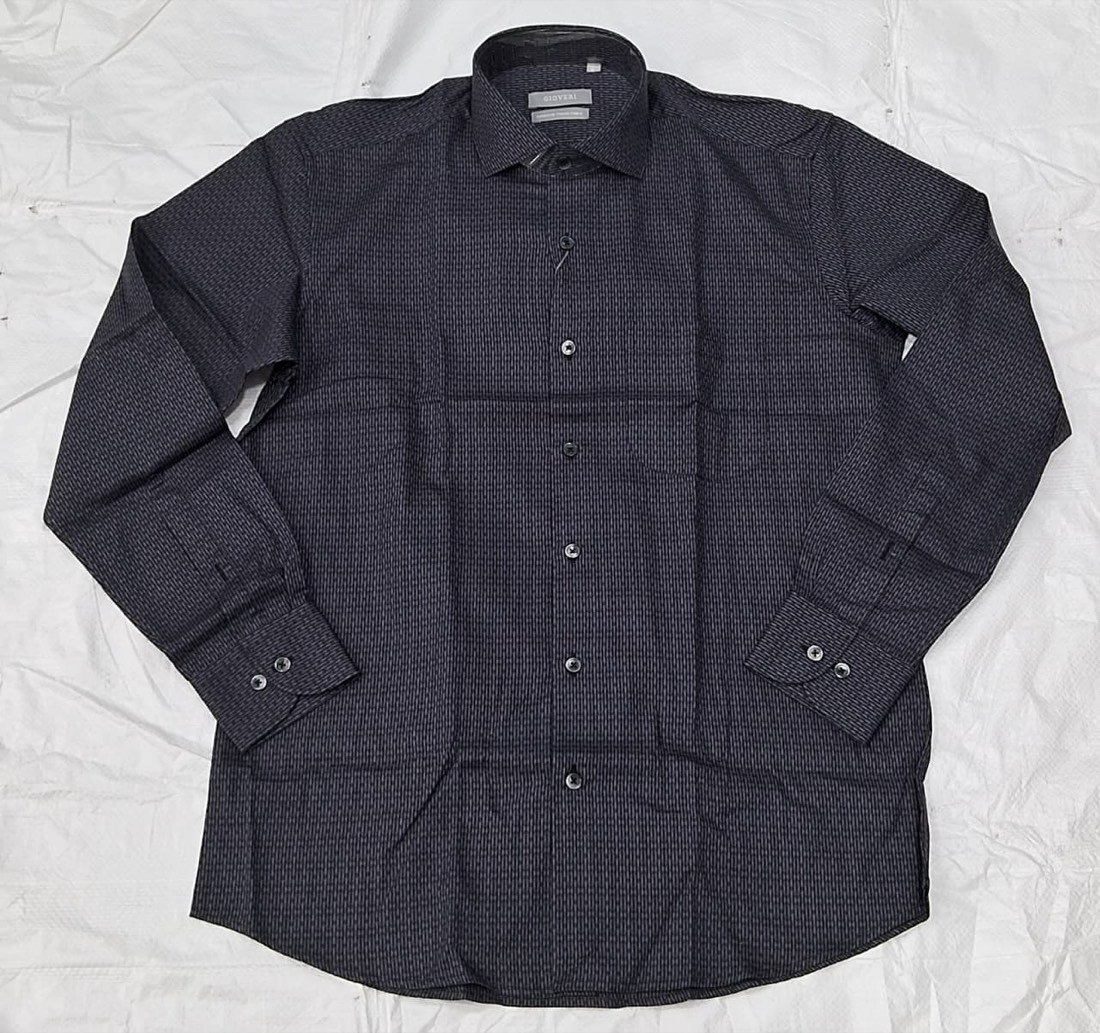
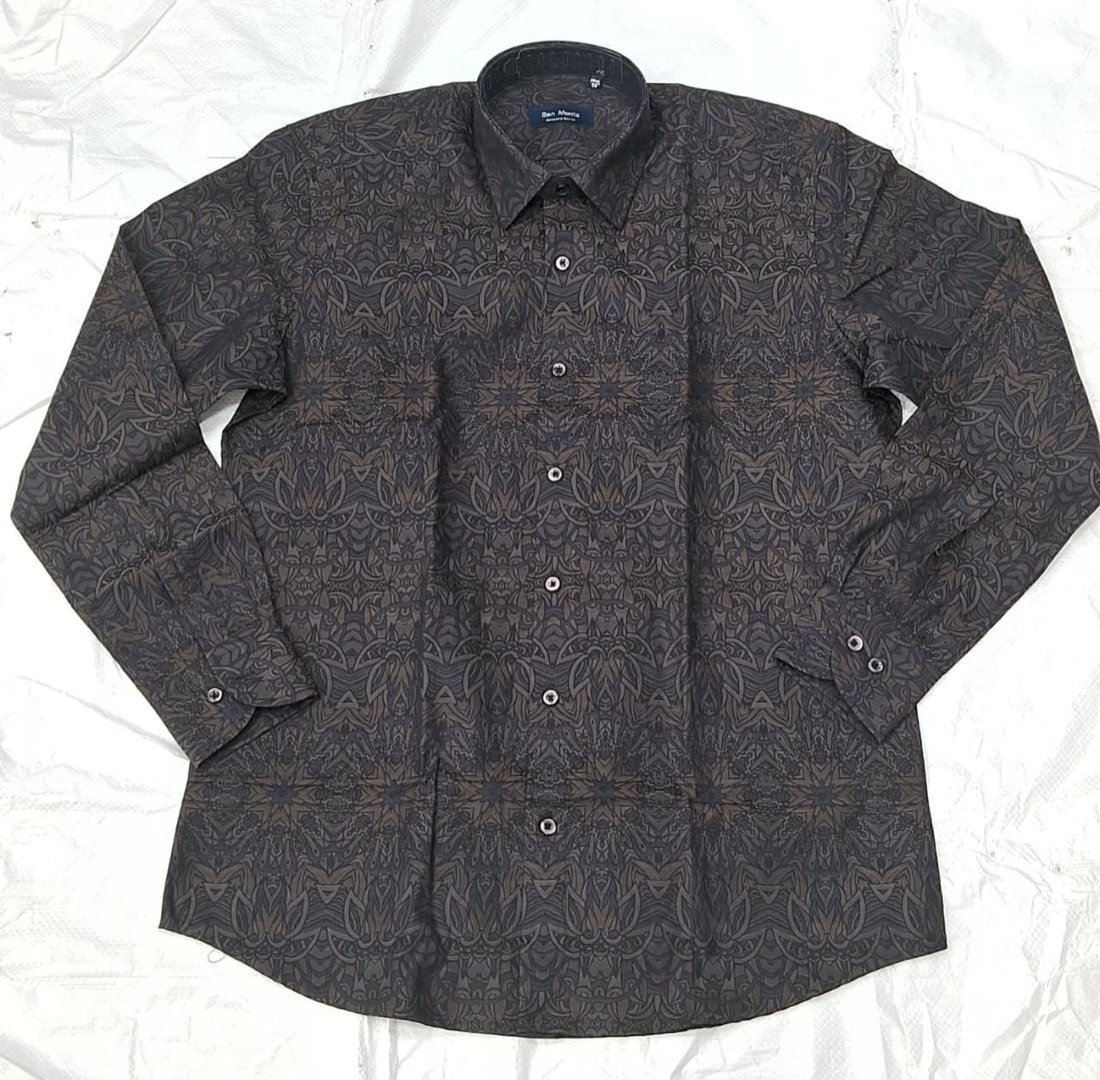
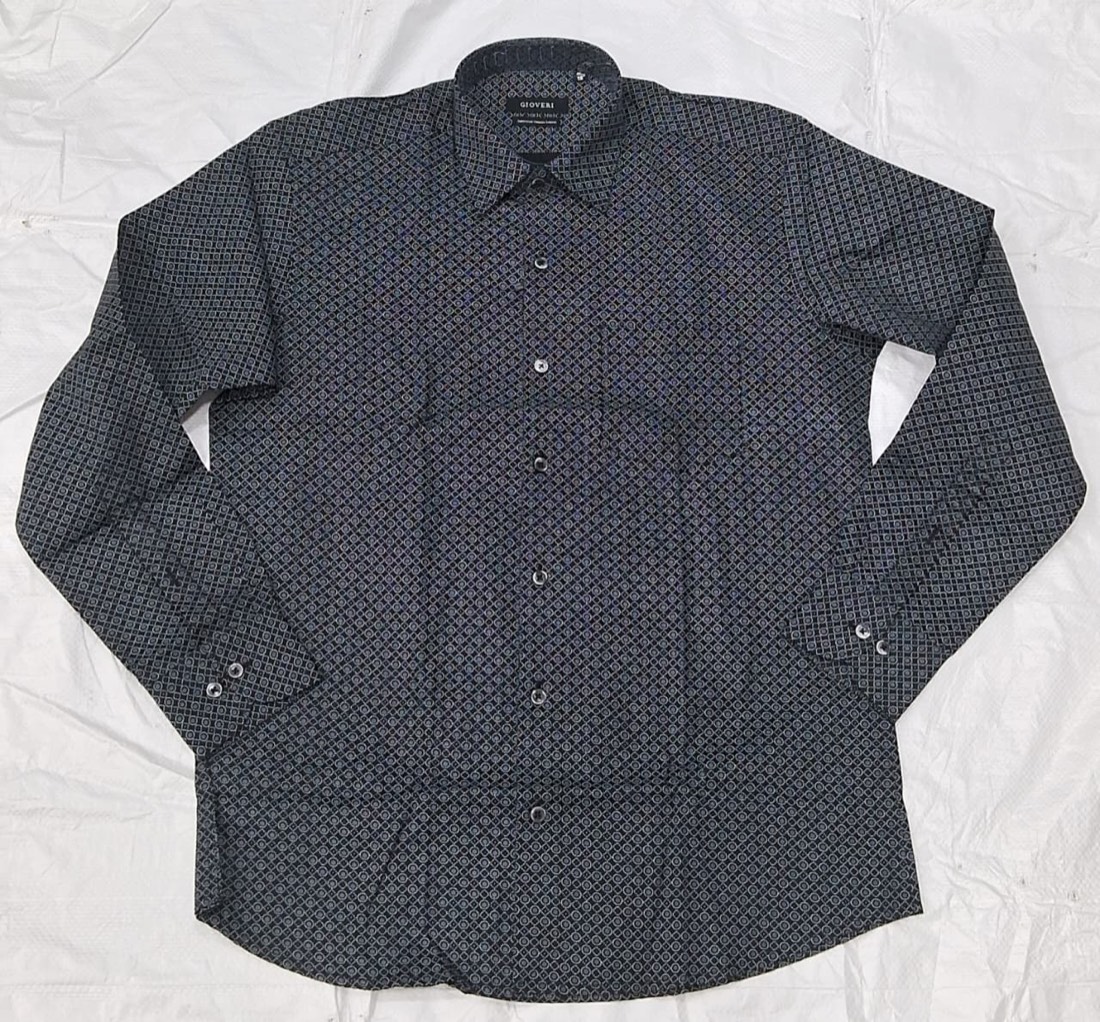
Charcoal shirt with a subtle tonal print laid flat
J/07 A tonal print — texture from afar, interest up close

J/07 · Office5 min read

Formal shirts and contemporary office style

As jackets and ties become optional, the shirt has become the office outfit.

In many workplaces the daily uniform is now a formal shirt and tailored trousers. That simplification puts the shirt under the spotlight. It has to look polished without a jacket's help, which means fit and collar structure matter more than ever.

Contemporary office shirts can carry more personality than traditional ones. Pastels, small checks, textured solids and tonal prints all work, provided they stay restrained in scale and contrast. Collars that hold their shape when open — semi-spread and button-down — are the most practical.

Practical guidelines

  • Tuck formal shirts in; untucked looks are for shirts cut specifically to be worn out.
  • Undo only the top button when going without a tie.
  • Keep sleeves down for meetings; neat rolls are fine at your desk in a relaxed office.
  • Keep a blazer at work — it upgrades the same shirt instantly.

The aim is effortless professionalism: a shirt that looks chosen, not defaulted to.

J/08 · Styling4 min read

How to coordinate formal shirts with trousers

Without a jacket, shirt and trousers are the whole outfit. Their relationship needs to be deliberate.

Use contrast. A light shirt with darker trousers is the most reliable formula — light blue with charcoal or navy, white with grey, cream with brown or olive. A darker shirt with lighter trousers works for evenings: navy with stone, maroon with grey.

Keep one pattern. If the shirt is patterned, choose solid trousers. If the trousers carry a check or texture, keep the shirt plain.

Mind the belt. The belt sits where shirt meets trousers, so it draws a line across the body. Match it to your shoes and choose a colour that bridges the two garments.

Check proportion. A slim shirt looks best with trousers that are also cleanly cut; a fuller shirt sits more naturally with straighter trousers. Mismatched volumes make the silhouette look unbalanced.

Quick pairings
Light blueCharcoal, navy, khaki
WhiteAnything tailored
Pale pinkNavy, grey, stone
NavyStone, grey, beige
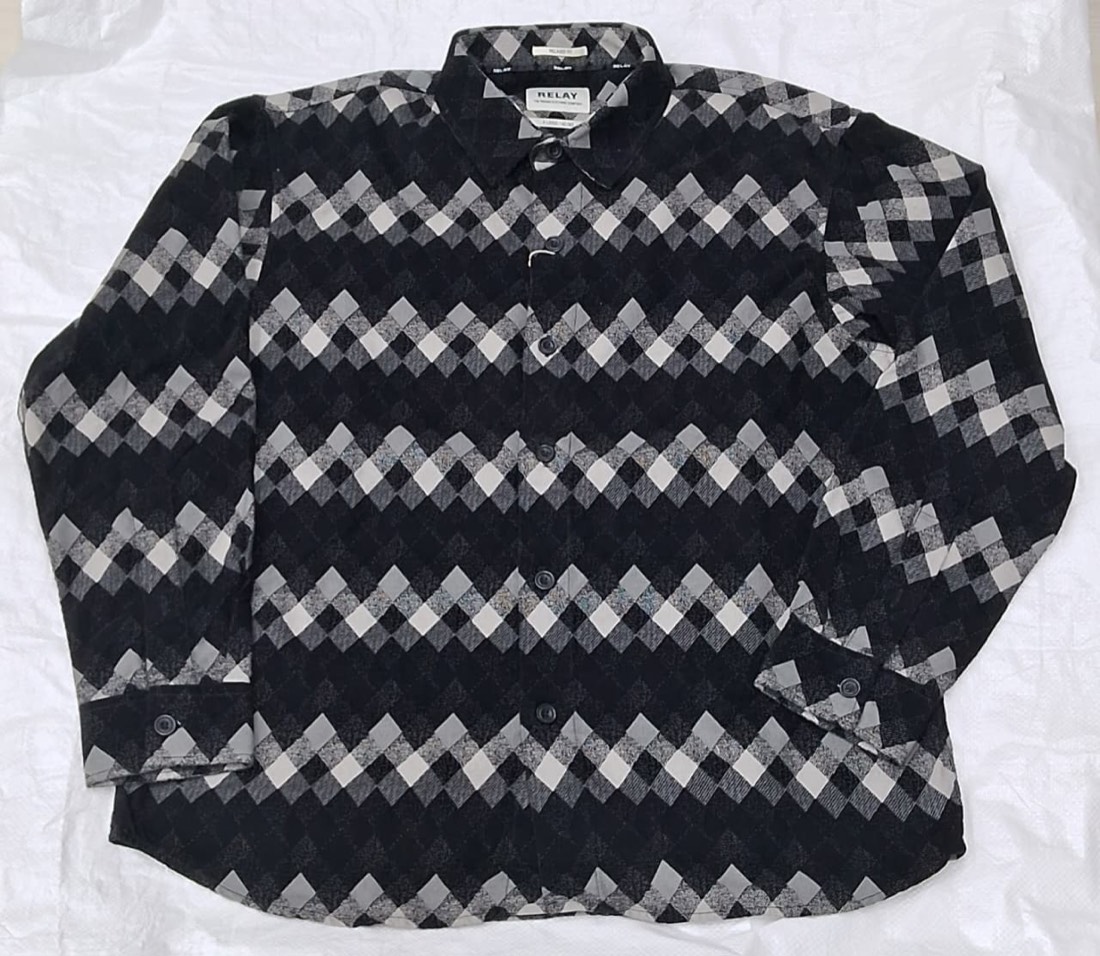
Black and white zigzag patterned long-sleeve shirt laid flat
J/08 A bold pattern asks for plain trousers

J/09 · Pattern5 min read

Understanding patterns in men's formalwear

Stripes, checks and prints each carry their own degree of formality — and their own rules for mixing.

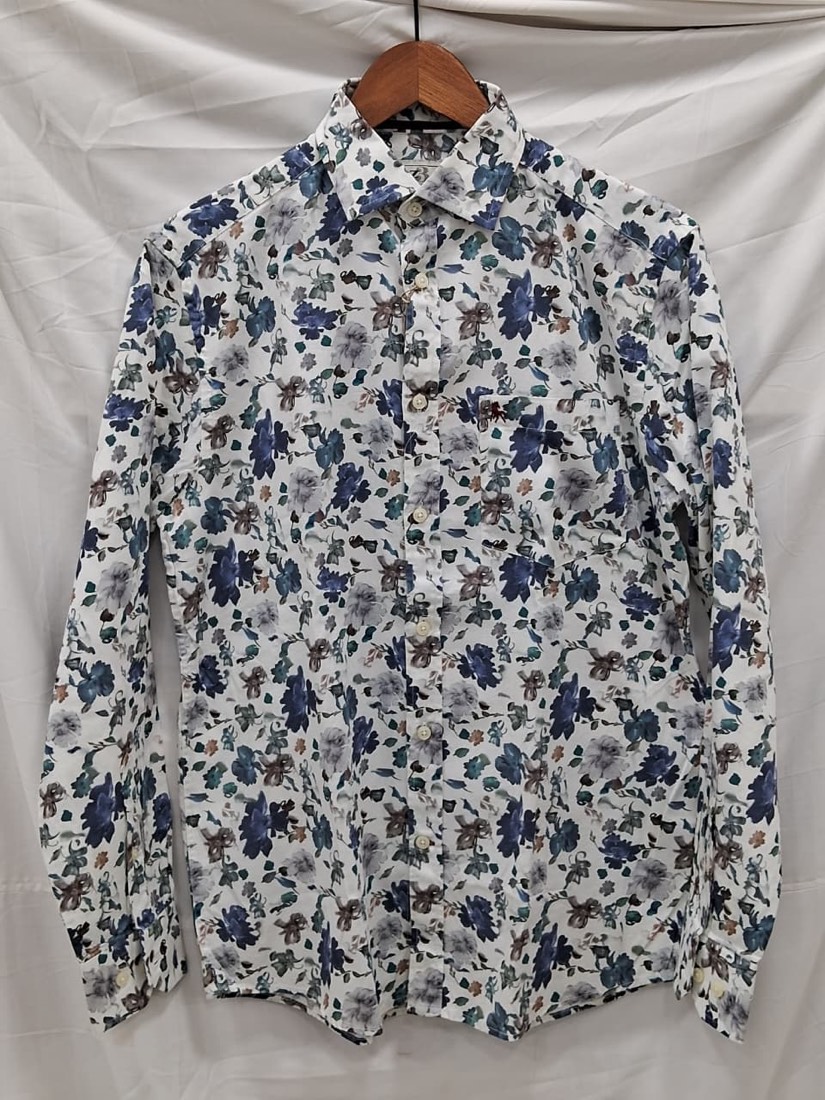
White shirt with a blue and grey floral print on a wooden hanger
J/09.a Floral — expressive, best off-duty
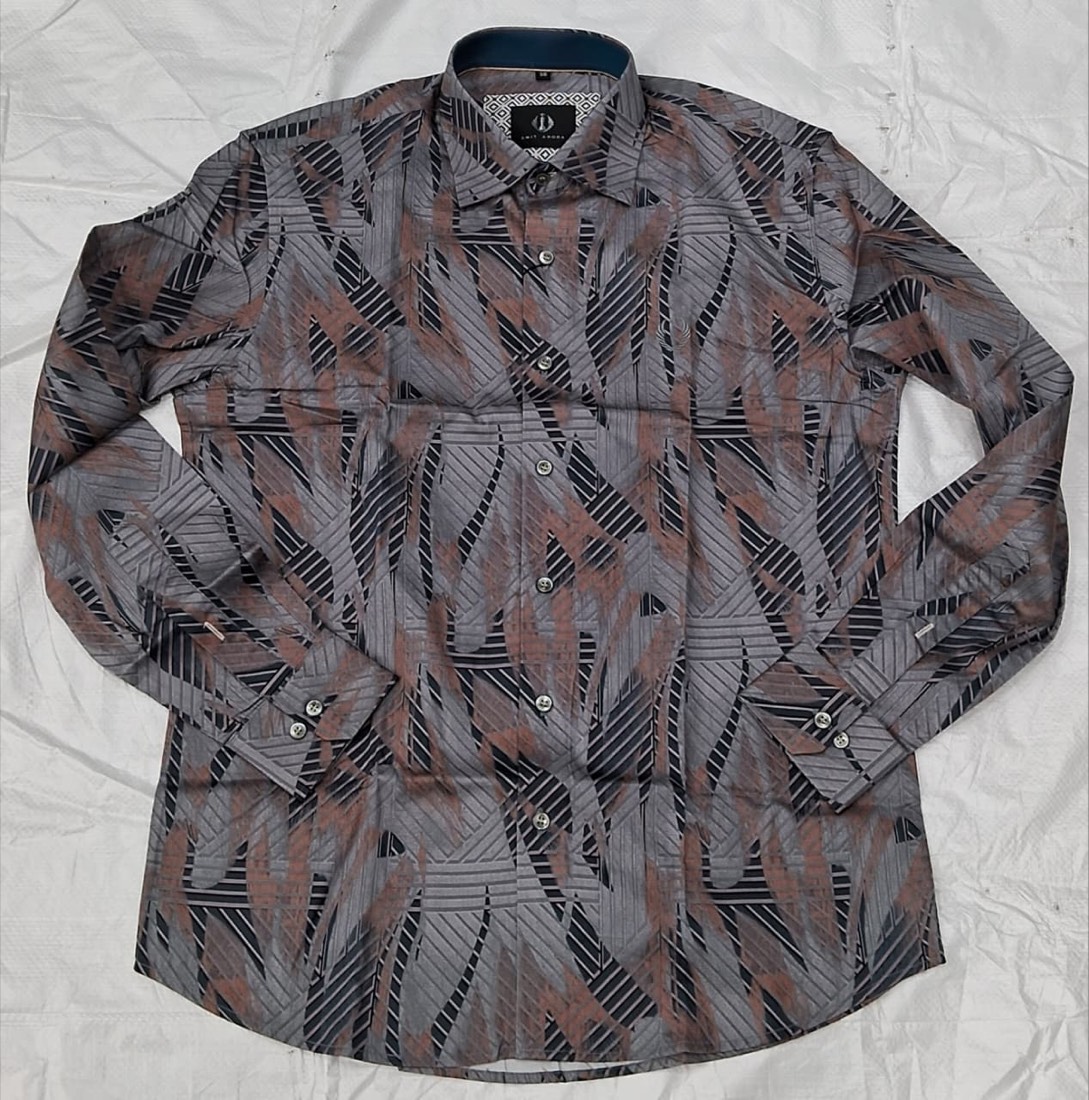
Grey shirt with an abstract leaf and line print laid flat
J/09.b Abstract print — scale and contrast decide formality

Stripes are the most formal pattern. Fine pinstripes and hairlines read almost as solids; broader or multi-colour stripes become progressively more casual.

Checks add a horizontal element that softens formality. Small gingham and graph checks are office-ready; larger tartans and bold checks lean toward the weekend.

Prints — florals, paisleys, geometrics — are the most expressive. Small, tonal prints can work in relaxed offices; large, high-contrast prints are best for evenings and social occasions.

Mixing patterns

The key is scale. When pairing a patterned shirt with a patterned tie or jacket, make the patterns clearly different in size so each remains legible. A fine stripe with a bold tie, or a small check with a larger herringbone jacket, works; two patterns of similar scale tend to clash.

Colour helps too: patterns that share a colour look related and intentional. When in doubt, keep one element solid. See Fabric Notes →

J/10 · Occasions5 min read

The art of dressing for professional occasions

Dressing well professionally is about reading the occasion and dressing one step above it.

Interviews. Choose a crisp white or light blue shirt, a classic or semi-spread collar and a tie unless you know the setting is very informal. The goal is to look prepared and let your answers do the talking.

Client meetings. Light blue and white, well pressed, with a jacket. Pattern, if any, should be fine and quiet.

Conferences and presentations. Solid mid-tones photograph well. Make sure the shirt lets you move freely and the collar holds its shape.

Office celebrations and dinners. This is where deeper colours and subtle prints shine — still tucked, still well-fitted, perhaps with a blazer.

Ceremonies. Follow the invitation's dress code. White or very pale shirts, spread collars and double cuffs are the traditional choices for the most formal events.

Across them all, the same principles hold: fit first, collar and cuffs immaculate, and colours chosen for the room. Browse the Style Directory →

Dark navy and grey checked shirt laid flat
J/10 A dark check for evening professional occasions

Read. Then dress with intent.

Put the essays into practice with the shirt families, or get in touch with Options Mall.