The Fitmanual.
Fit is the detail everyone notices and few can name. This manual explains four silhouettes and eight checkpoints so you can recognise a balanced fit in any mirror.
No tape measure required — only honest observation and a little movement.
Four shirt silhouettes
Slim fit
Cut close through the chest and tapered at the waist, with little spare fabric when tucked. Sharp under fitted suits and on slimmer or athletic builds. It should skim, not grip.
Tailored fit
A middle path: gently shaped through the waist but with more room than slim. A good choice for those who want a clean line without a close cut. Exact definitions vary between makers.
Regular fit
Straight through the body with comfortable ease in the chest and waist. Suits a wide range of builds and gives the classic look under traditionally cut suits.
Relaxed fit
The roomiest cut, sometimes with a slightly dropped shoulder. Comfortable and casual; better suited to smart-casual dressing than to formal tailoring.
The same rules, three bodies.
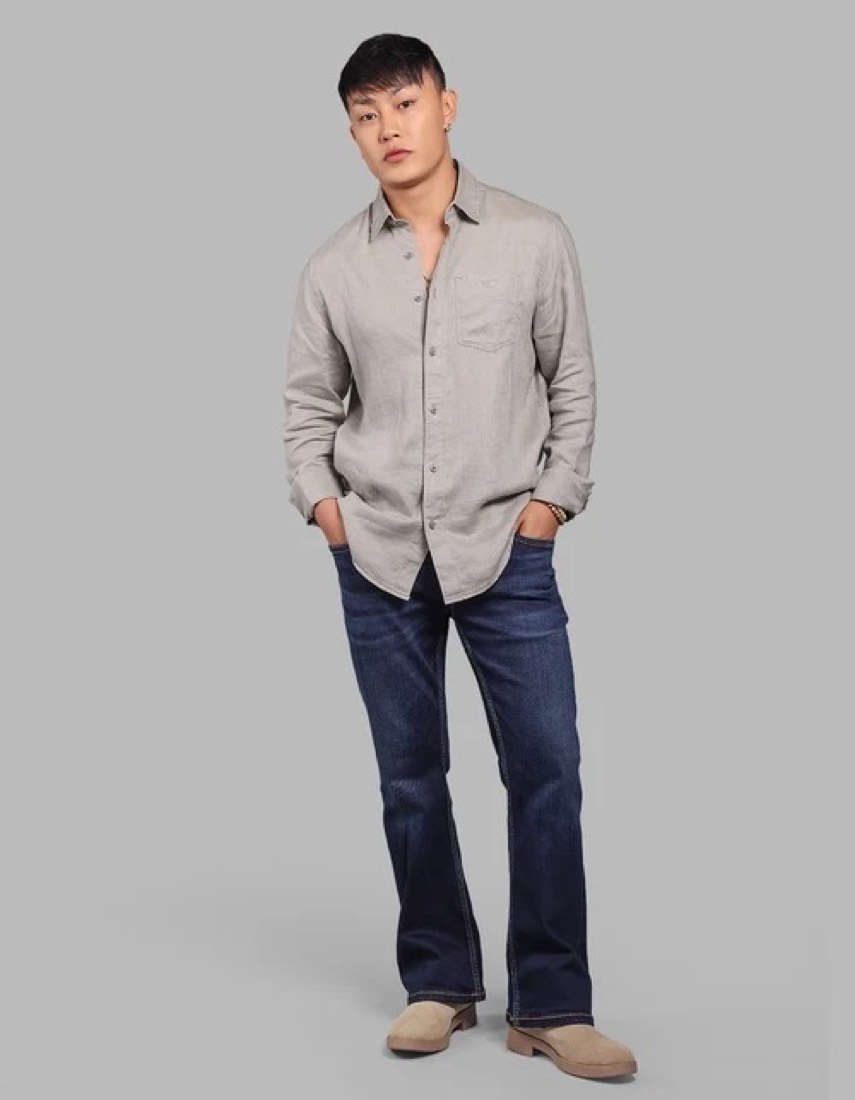
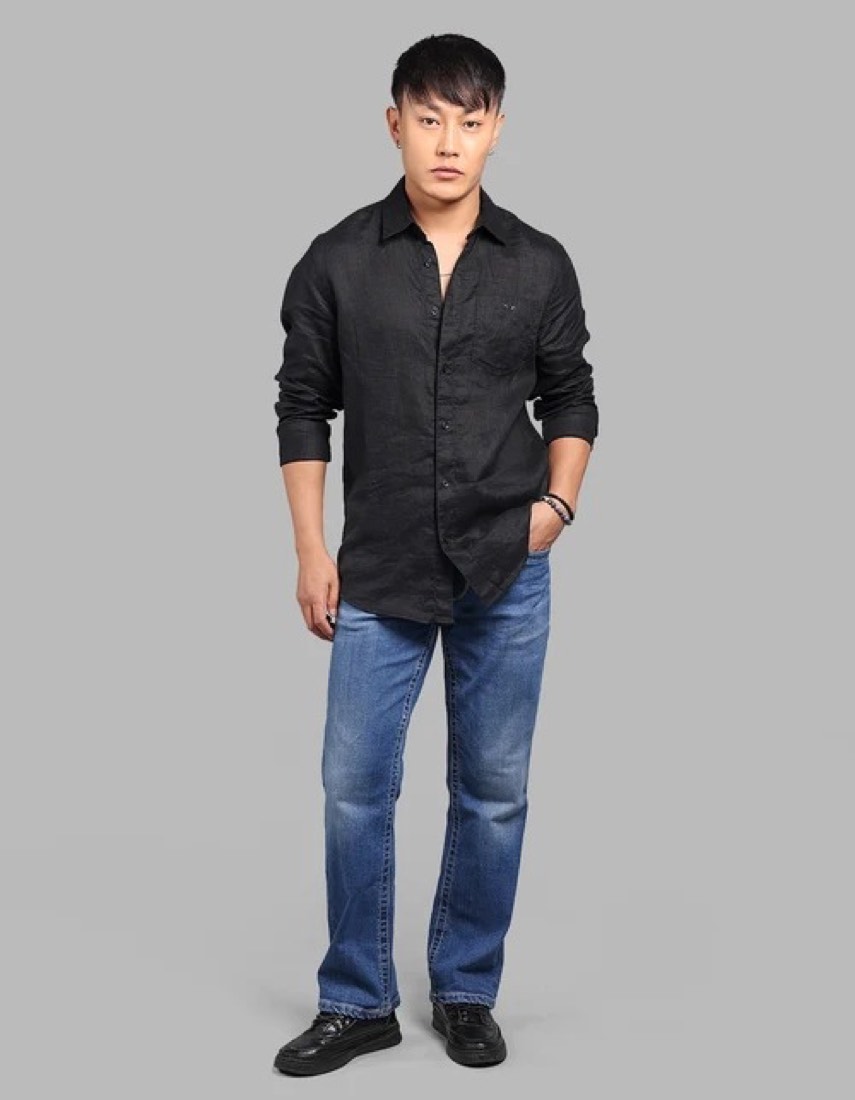
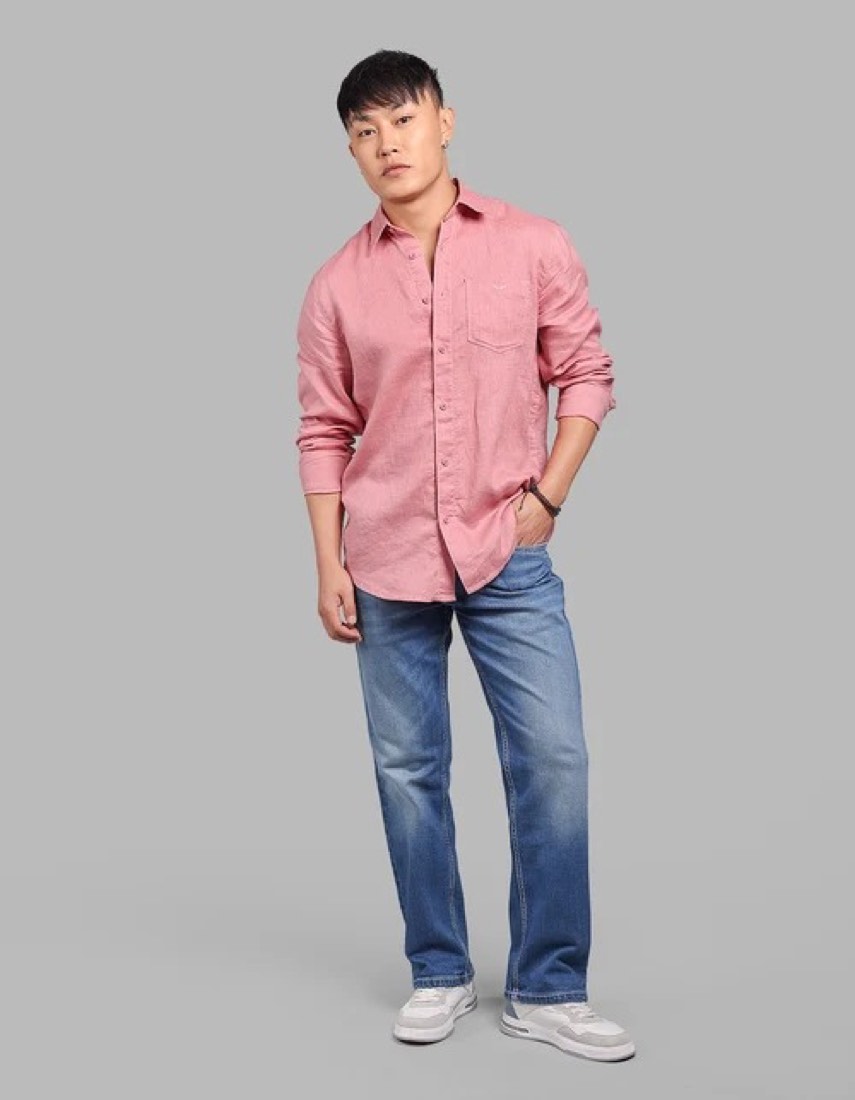
Notice how, in each photograph, the shoulder seam lands near the edge of the shoulder and the body follows the torso without pulling. Styling changes — tucked, untucked, sleeves rolled — but the fit principles stay the same.
Eight fit checkpoints
Shoulder
The shoulder is the foundation of fit, because it is the hardest part of a shirt to alter. The shoulder seam should sit at — or very close to — the edge of your shoulder bone.
If the seam falls down onto the upper arm, the shirt is too large and will look sloppy however well the rest fits. If it sits up on the shoulder, pulling towards the neck, the shirt is too small and will restrict your arms.
Self-test
- Seam meets the shoulder edge
- No dimple or pull at the top of the sleeve
- Fabric lies smooth across the yoke
Collar
Buttoned to the top, the collar should close without pinching or pushing skin over the band. A common guide is that you can slide one or two fingers between collar and neck.
A collar that is too loose looks sloppy under a tie and lets the knot droop; one that is too tight is uncomfortable and visibly strains. Collar comfort matters even if you rarely button it: a well-sized collar holds its shape better when worn open.
Self-test
- One or two fingers fit inside the buttoned collar
- Collar points lie flat and symmetrical
- Turning your head doesn't drag the collar
Chest
The chest should lie flat with gentle room for breathing and movement. The clearest sign of a too-tight chest is pulling: horizontal tension lines or "X"-shaped creases radiating from the buttons, and small gaps opening between them.
Too much fabric shows as loose folds or a balloon effect across the front. The aim is clean, uninterrupted fabric — especially important on striped shirts, where any strain bends the lines.
Self-test
- No gaps between buttons when seated
- No "X" creases across the front
- Stripes stay straight
Sleeve length
With your arms relaxed at your sides, the sleeve should end where your wrist meets your hand. When you bend your arm, the cuff should stay at the wrist rather than riding halfway up the forearm.
Under a jacket, a well-judged sleeve shows a small band of cuff beyond the jacket sleeve — a detail that makes tailoring look finished. Sleeves that are too long collect in folds above the cuff; too short, and the cuff disappears.
Self-test
- Cuff reaches the wrist with arms relaxed
- Reaching forward doesn't expose the forearm
- A little cuff shows beneath a jacket
Cuff position
Buttoned, the cuff should sit snugly enough at the wrist bone that it doesn't slide down over your hand, yet loosely enough to allow a watch underneath if you wear one. Many cuffs have two buttons side by side so you can choose the tighter or looser setting.
The sleeve itself should be slim enough that it doesn't billow above the cuff — a common sign of a shirt that is generally too large.
Self-test
- Cuff stays at the wrist bone
- Room for a watch if needed
- No billowing above the cuff
Waist shape
Tucked in, the shirt should follow the line of your torso without a ring of excess fabric ballooning above the belt (sometimes called a "muffin top" of shirt). Slim and tailored fits reduce this with tapering or back darts; regular fits allow a little more ease.
If the shirt pulls across the stomach when seated, the waist is too narrow for you — choose a less shaped fit.
Self-test
- No balloon of fabric above the belt
- No pulling across the stomach when seated
- Back sits smoothly when tucked
Shirt length
A formal shirt designed to be tucked should be long enough to stay in when you raise your arms, bend or sit. Its curved hem is deliberately longer at front and back for this reason.
If you plan to wear a shirt untucked, it should be shorter, ending around the middle of the trouser zip, and is usually cut with a straighter hem. Wearing a long formal shirt untucked rarely looks intentional.
Self-test
- Stays tucked with arms raised
- Untucked shirts end near mid-zip
- Hem doesn't bunch inside trousers
Movement
The final test is life. Reach forward as if across a desk, raise your arms, cross them, sit down and turn. A well-fitted shirt lets you do all of it without the back straining, the buttons pulling or the hem escaping.
Back pleats and a well-cut armhole help here. If the shirt only looks good standing still, it doesn't fit.
Self-test
- Reach forward — back doesn't strain
- Raise arms — hem stays tucked
- Sit — buttons don't gape
Balance, not tightness.
A balanced fit is one where no single area draws attention. Run through the checkpoints in order — shoulder first, because it can't easily be changed — and choose the silhouette that satisfies the most of them for your build.
- StartFind the size where shoulders and collar fit
- ThenChoose the silhouette (slim, tailored, regular) that suits the chest and waist
- FinallyCheck sleeves, length and movement
- RememberSizes and fit names vary between brands — always try on
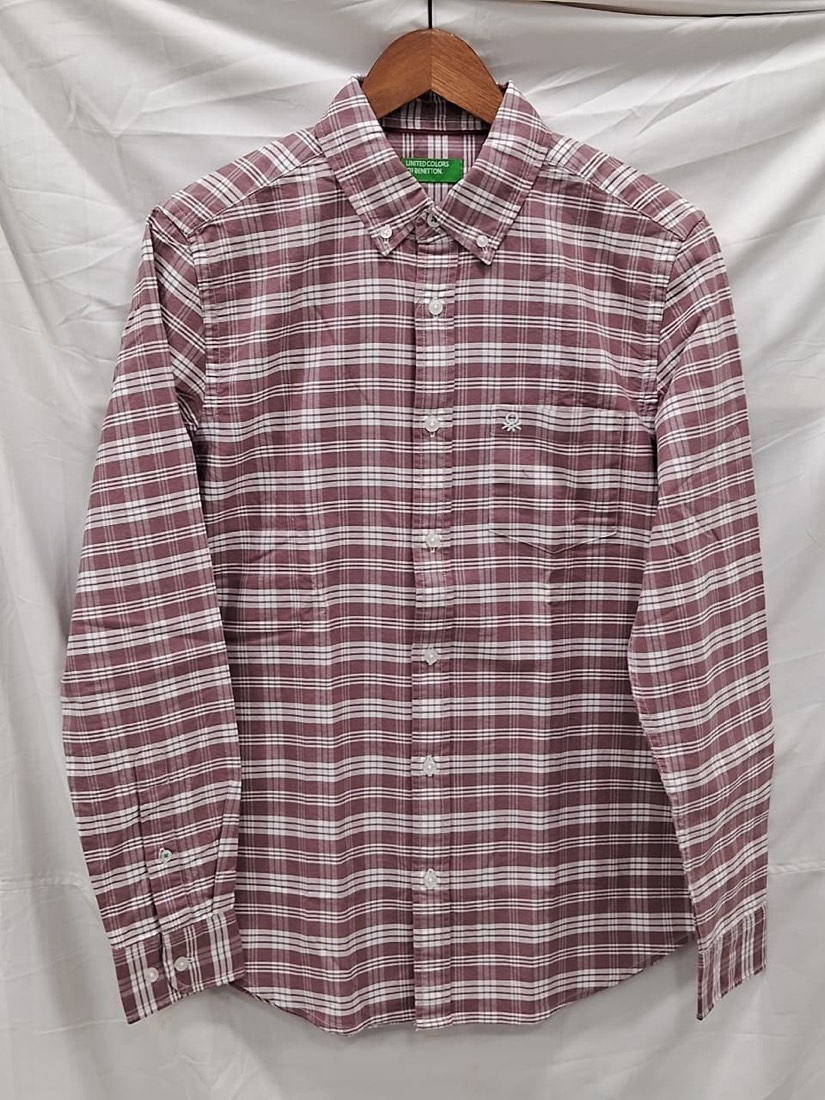
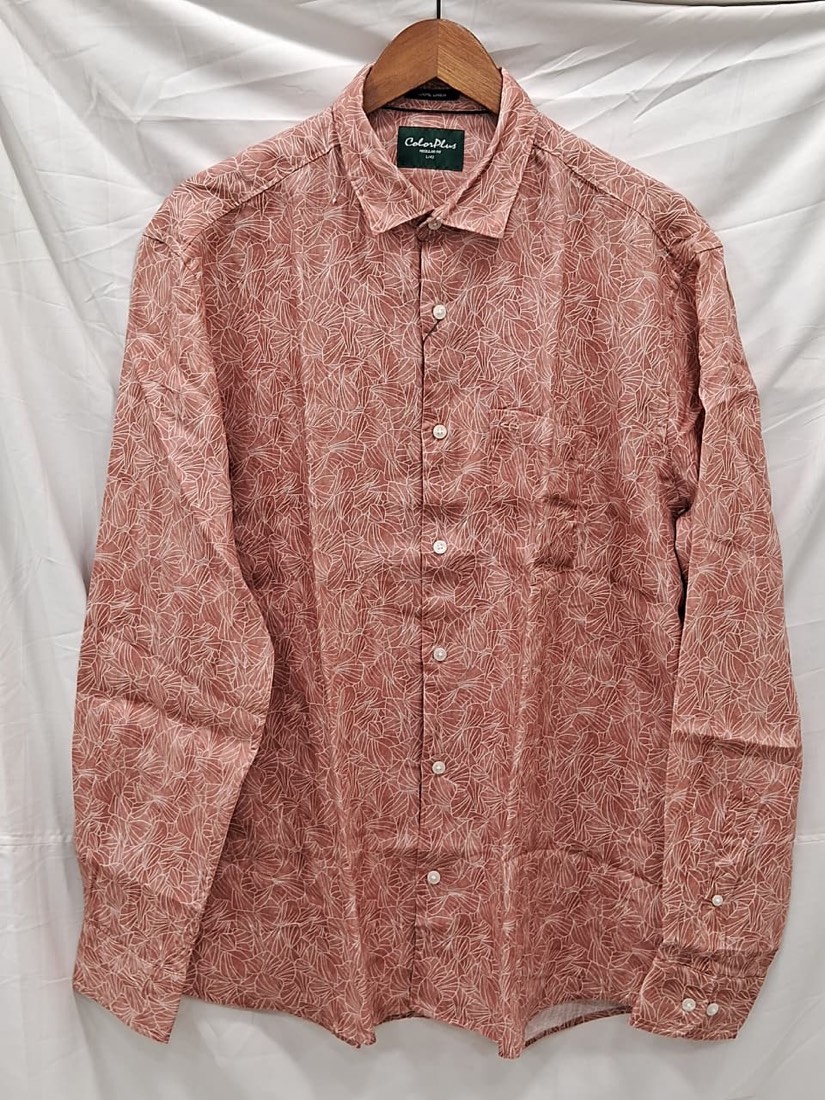
Fit first. Everything else follows.
With the fit right, fabric and colour can do their work. Continue to Fabric Notes, or see fit in context in the Style Directory.