The Shirt Code — A Modern Gentleman's Field Guide Vol. 01 · Men's Formal Shirts Presented by Options Mall, Mumbai
Visual diary · Entries 01–10
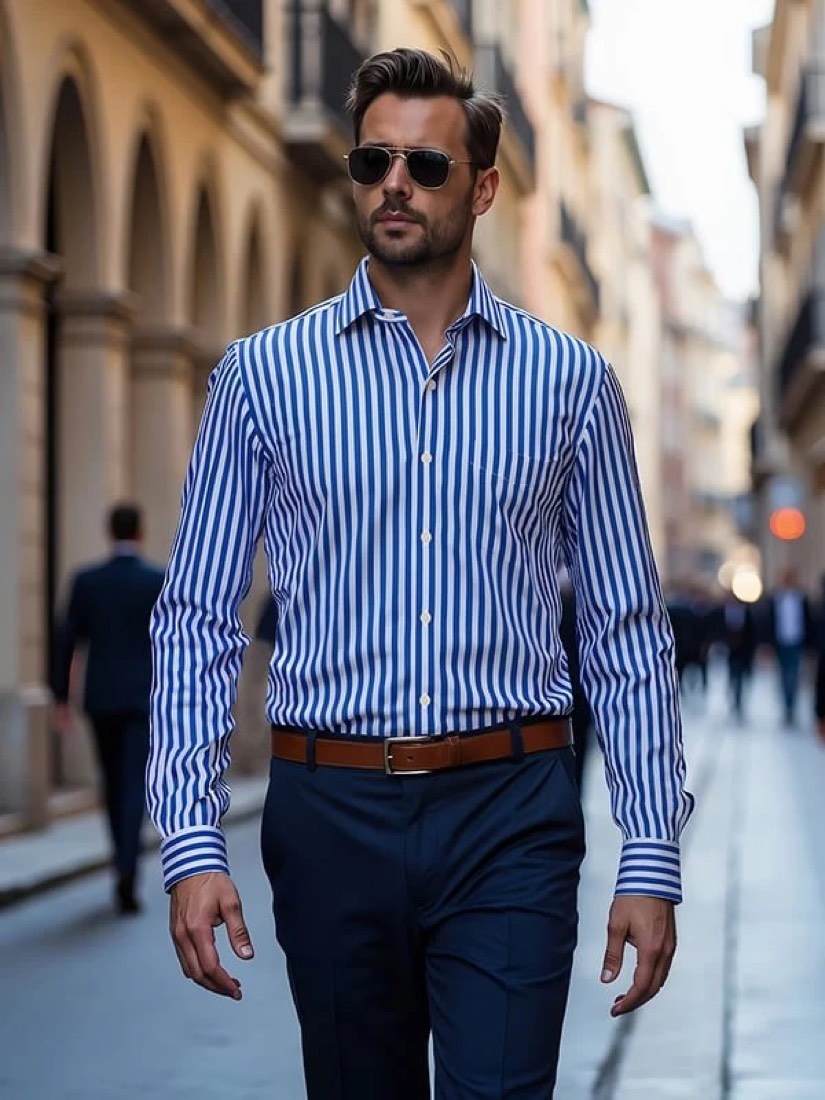
Man walking down a city street in a blue and white striped shirt tucked into navy trousers with a brown belt and sunglasses
Entry 00 Stripe, navy, brown leather — a complete formula
The Style Directory

A diary of dressing well.

Ten entries on wearing men's formal shirts in real situations — what to choose, what to pair it with, and why it works.

  1. 01Traditional business
  2. 02Modern office
  3. 03Formal meetings
  4. 04Business presentations
  5. 05Smart casual
  6. 06Business travel
  7. 07Formal events
  8. 08Shirt & trousers
  9. 09Shirt & blazer
  10. 10Tie & collar

Traditional business dressing

Traditional business dress is built on restraint. A white or light blue shirt, a dark suit in navy or charcoal, a tie, and polished leather shoes. The shirt's job is to provide a clean, light frame between the suit and the face, so solid colours and very fine stripes are the natural choices.

Fit matters more than fashion here: a shirt that pulls across the chest or billows at the waist will undermine the whole outfit. Choose a collar with enough structure to sit neatly under the jacket lapels, and make sure a little cuff shows at the wrist.

Recipe

  • ShirtWhite, light blue or fine stripe; long sleeves
  • CollarClassic, point or semi-spread
  • SuitNavy, charcoal or mid-grey
  • TieSolid, small pattern or subtle stripe
  • ShoesBlack or dark brown leather
  • AvoidBold prints, short sleeves, button-down collars
Modern office dressing

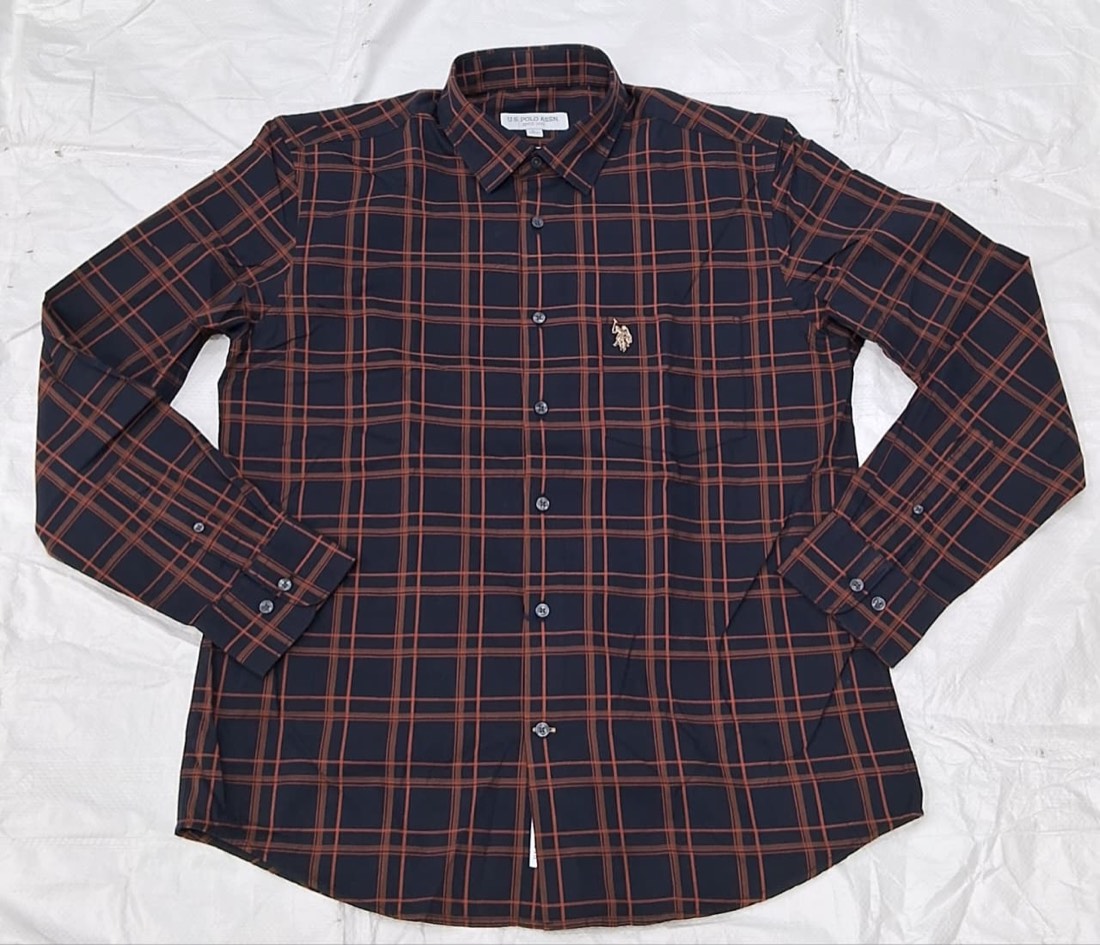
Most contemporary offices sit somewhere between suit and casual. The formal shirt is the anchor: worn with tailored trousers, often without a tie and sometimes without a jacket. That means the shirt carries more of the outfit's personality — and colour and pattern can come forward.

Small checks, pastels, deeper solids and textured surfaces all work. Keep the collar crisp so it holds its shape open, and keep shirts tucked unless they are specifically cut short to be worn out.

Recipe

  • ShirtSmall check, pastel or textured solid
  • CollarSemi-spread or button-down, worn open
  • TrousersCharcoal, navy, stone or olive
  • LayerOptional unstructured blazer
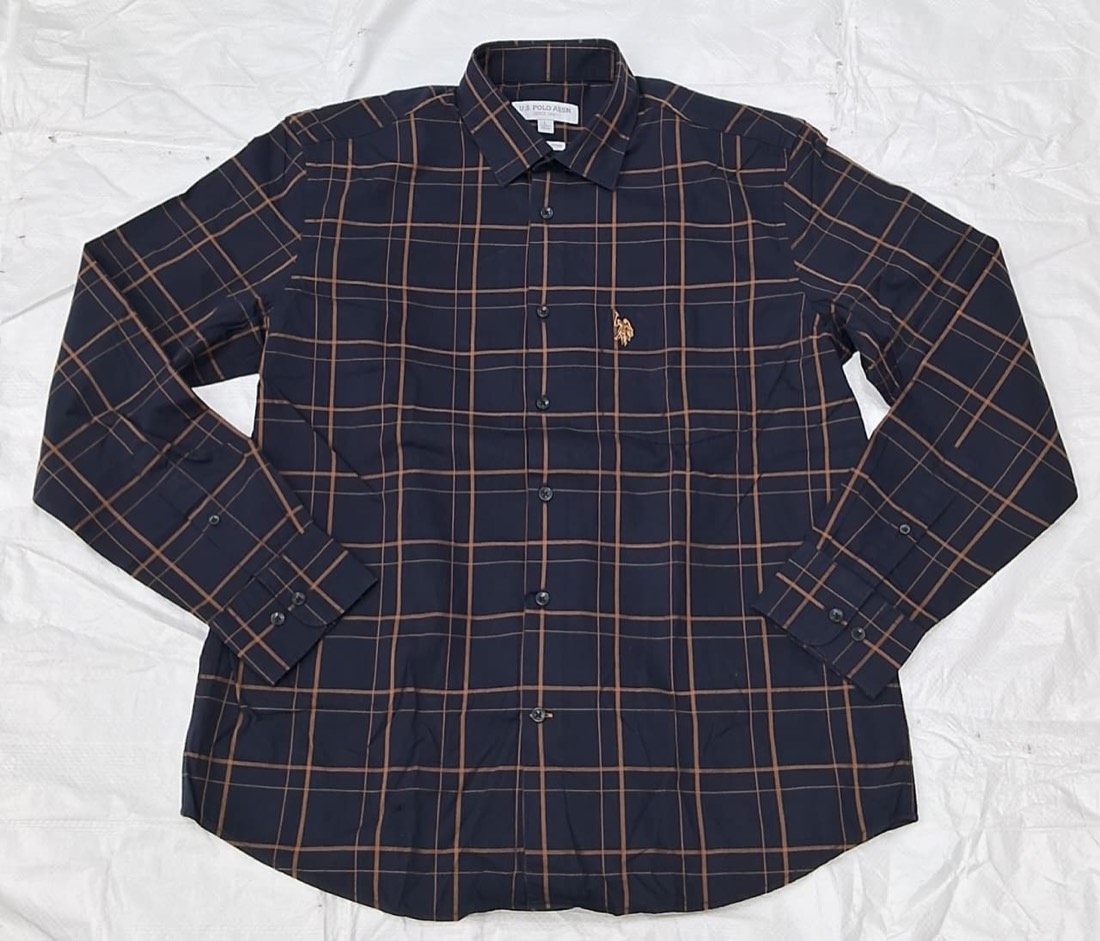
Navy shirt with a fine orange and white check laid flat
02.a Navy check
Burgundy and navy checked shirt laid flat
02.b Burgundy check

Formal meetings

For an important meeting — a client, a negotiation, a senior conversation — the aim is to look composed and trustworthy, so that attention stays on what you say. Light blue is particularly effective: it is calm, flattering and slightly less stark than white.

Wear a jacket even if you take it off later. Check the shirt for creases before you leave; a freshly pressed collar and placket signal preparation as clearly as a well-organised agenda.

Recipe

  • ShirtLight blue or white, smooth surface
  • CollarStructured classic or semi-spread
  • JacketNavy or grey suit, or a blazer with tailored trousers
  • TieRecommended; quiet colours
  • DetailsPressed collar and cuffs; minimal accessories
  • AvoidLoud patterns that pull focus

Business presentations

On stage or on camera, a shirt is seen from further away and under stronger light. Solid colours and mid-tones photograph well. Very fine, high-contrast stripes and tight checks can shimmer on screen, so save them for in-person days.

Choose a collar that frames the face — a semi-spread or spread works well — and make sure the shirt allows you to gesture freely without the cuffs riding up or the front pulling.

Recipe

  • ShirtSolid light blue, white or soft pastel
  • CollarSemi-spread or spread
  • FitRoom through the shoulders and back to move
  • CameraAvoid tight stripes and very small checks

Smart casual styling

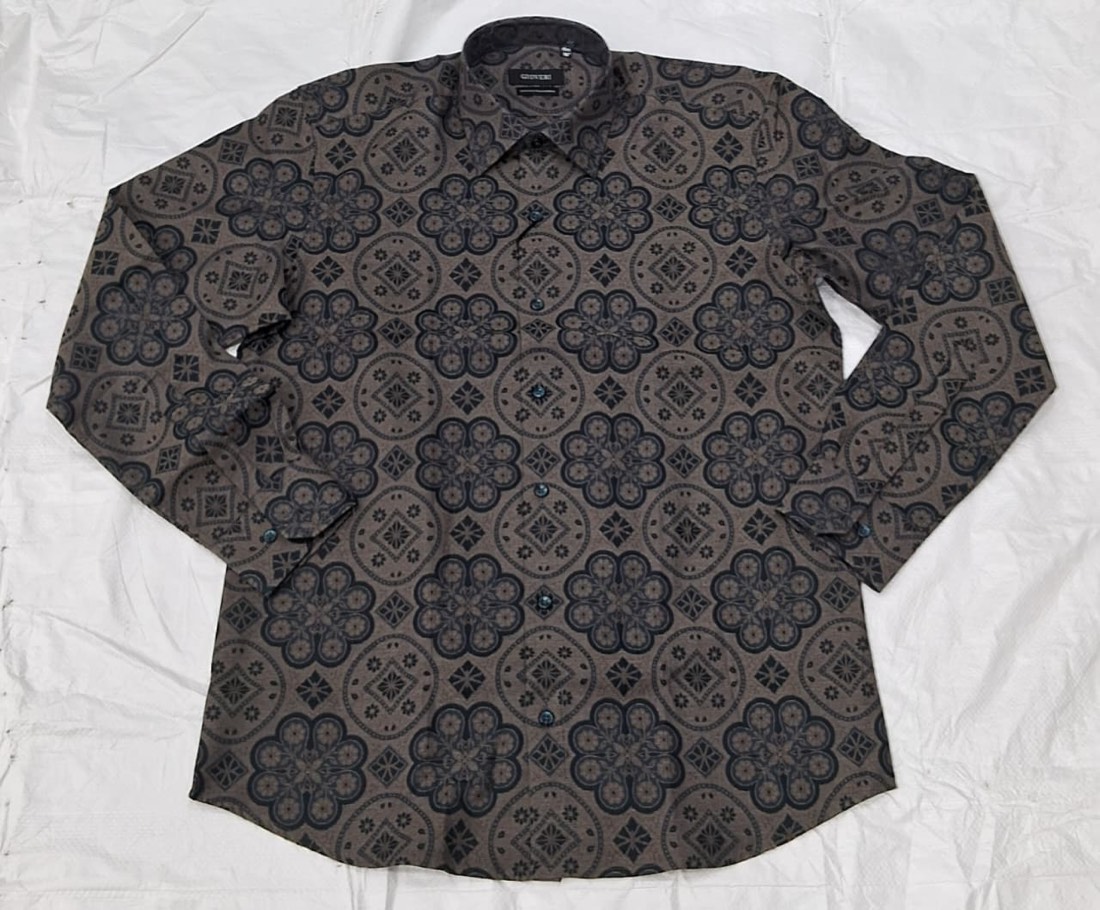
Smart casual is where printed and patterned shirts come into their own. A paisley or medallion print with plain chinos and loafers looks considered rather than careless, provided the shirt fits well and the rest of the outfit stays simple.

Let the shirt be the only pattern. Choose trousers in a colour taken from the print — a navy or tan picked out of the motif — and the outfit will hold together naturally.

Recipe

  • ShirtPaisley, floral, geometric or bold check
  • TrousersSolid chinos picking up a print colour
  • ShoesLoafers, suede or clean leather sneakers
  • CollarOpen; sleeves can be neatly rolled
Navy shirt with an all-over paisley-style print laid flat
05.a Navy paisley
Dark shirt with a beige medallion print laid flat
05.b Medallion print

Business travel

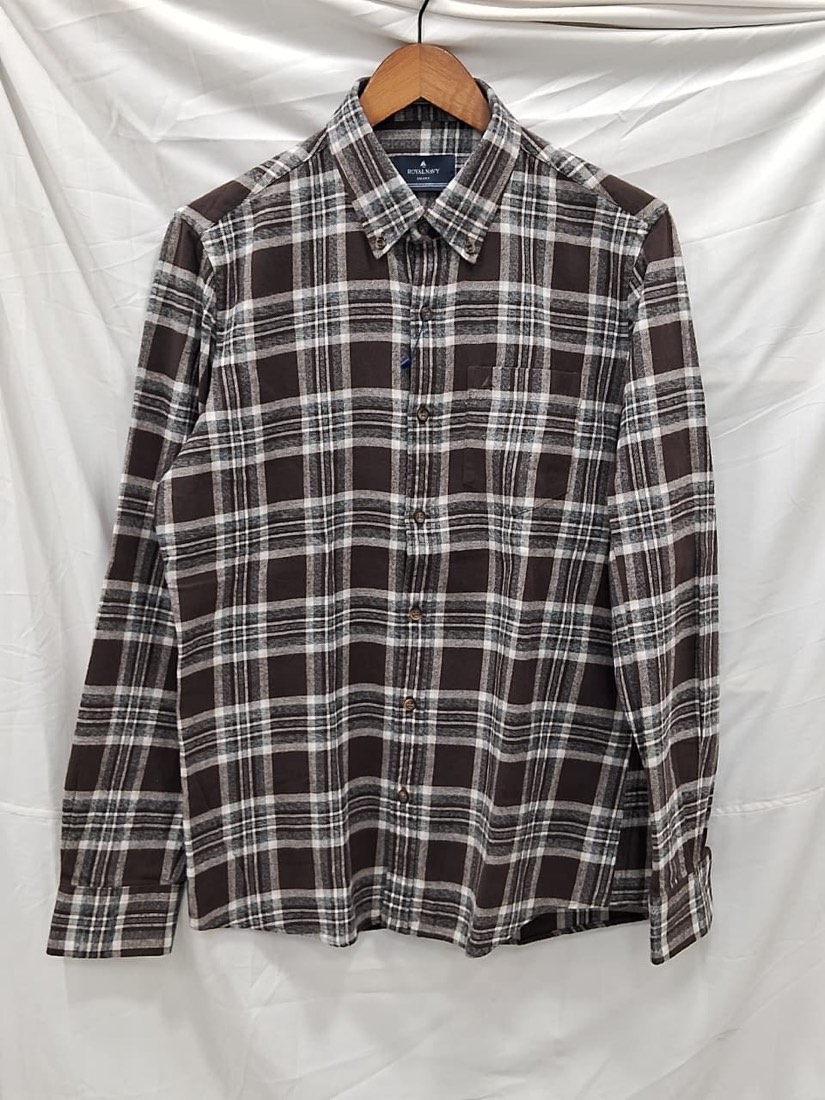
Travel asks shirts to work hard: long hours seated, changing temperatures, limited luggage. Mid-tone checks and stripes forgive creases better than pale solids, and a button-down collar stays tidy without a tie or collar stays.

Pack shirts that share a colour story — blues, greys and earth tones — so each one works with the same one or two pairs of trousers and a single blazer.

Recipe

  • ShirtMid-tone check or stripe
  • CollarButton-down or firm semi-spread
  • PackShirts sharing one colour story
  • LayerOne versatile navy blazer
Brown and cream check shirt on a wooden hanger
06.a Brown check
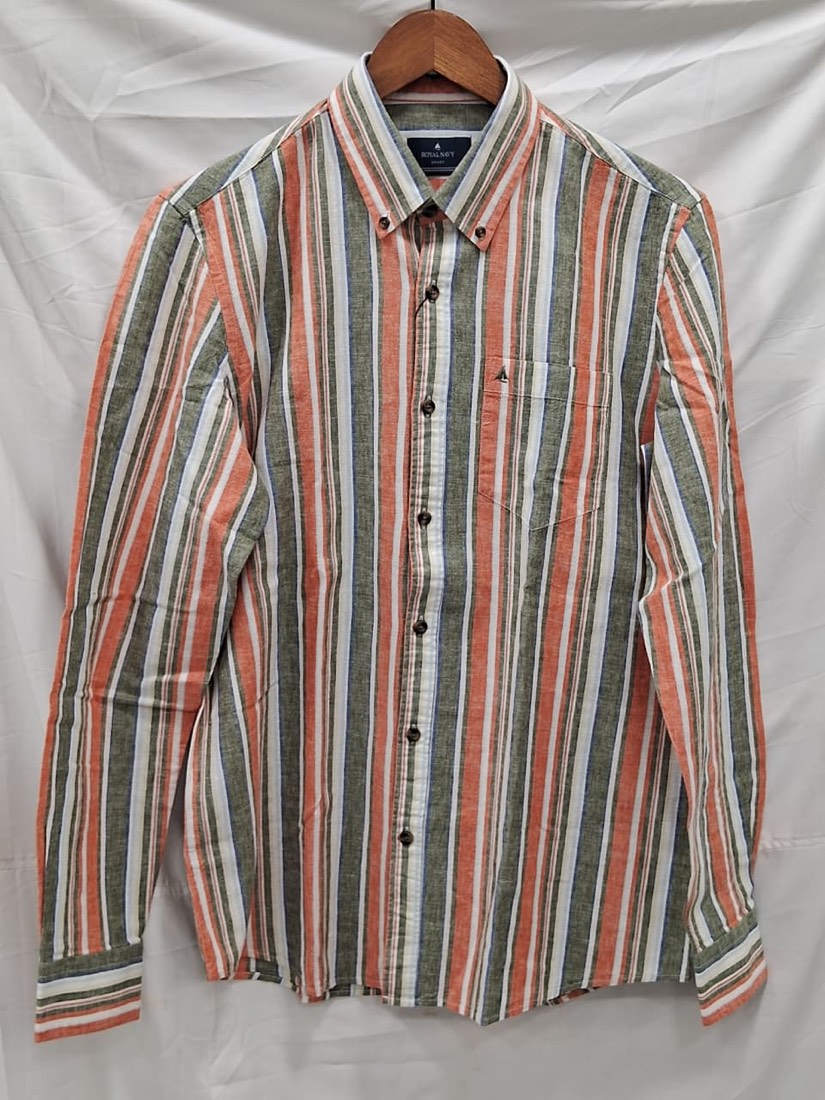
Multi-colour vertical stripe shirt in orange, green and cream on a wooden hanger
06.b Multi-stripe

Formal events

Weddings, receptions, award evenings and ceremonies call for the most formal shirts in the wardrobe. White is the classic choice, followed by very pale solids. A spread or cutaway collar suits the fuller tie knots often worn on these occasions, and double cuffs with cufflinks add a finishing touch.

Always follow the dress code or invitation. Where a specific dress code applies — such as black tie — it will dictate the shirt, collar and cuff style, and it is worth checking those requirements in advance.

Recipe

  • ShirtWhite or very pale solid, smooth surface
  • CollarSpread or cutaway
  • CuffsDouble cuffs with cufflinks where appropriate
  • SuitDark, well-pressed
  • TieSilk, with a fuller knot
  • CheckThe invitation's dress code

Shirt & trouser coordination

The simplest rule is contrast: a light shirt with darker trousers, or a darker shirt with lighter trousers. Light blue with charcoal, pale pink with navy, cream with olive, navy with stone — each pairing reads clearly and keeps the outfit crisp.

Tone-on-tone (shades of the same colour) is more fashion-led and works best when the textures differ. Belts and shoes should match each other; the belt also visually divides shirt and trousers, so its colour matters.

In hot weather, short-sleeved shirts are cool and practical, but they belong to casual dressing. Keep them for weekends and informal occasions, and choose long sleeves whenever formality is expected.

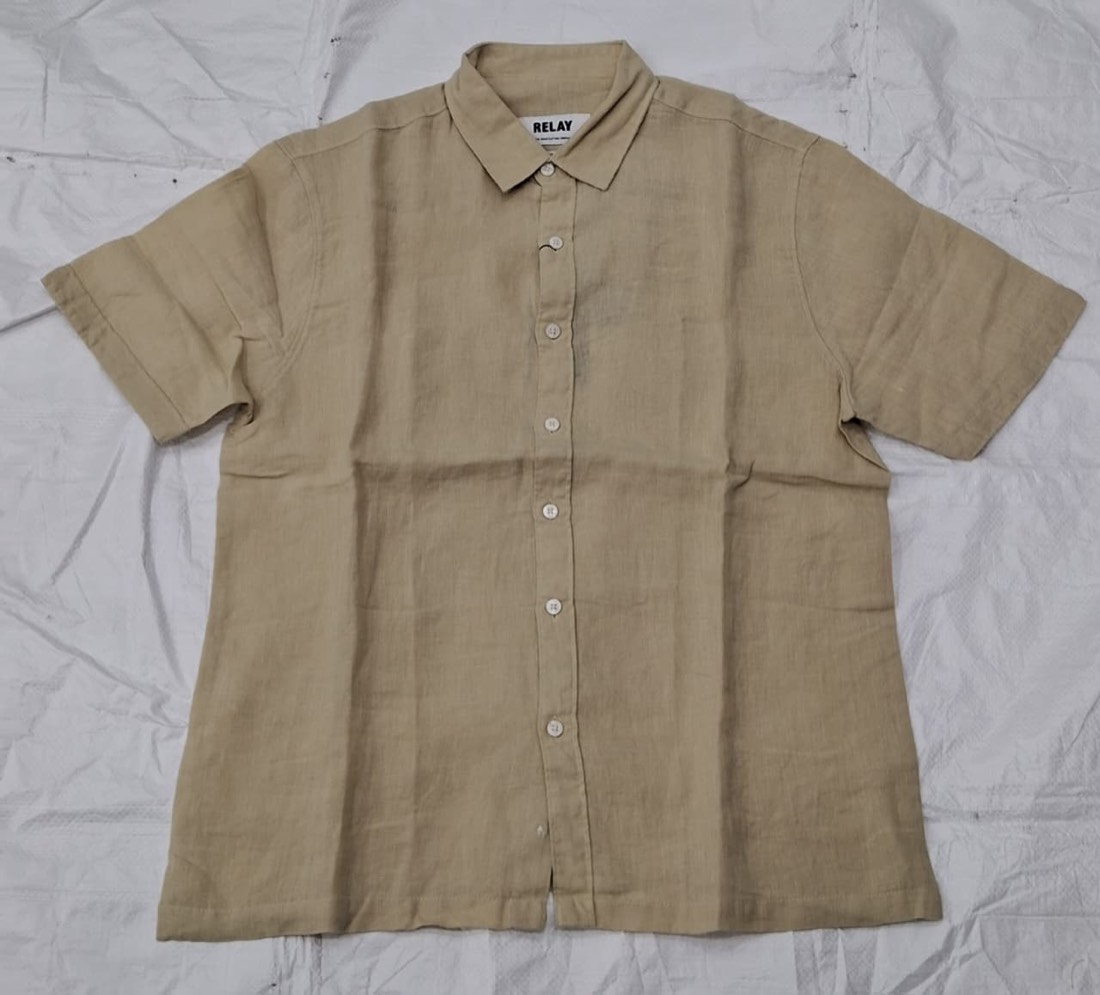
Sand-coloured short-sleeve shirt laid flat
08.a Sand — pair with navy
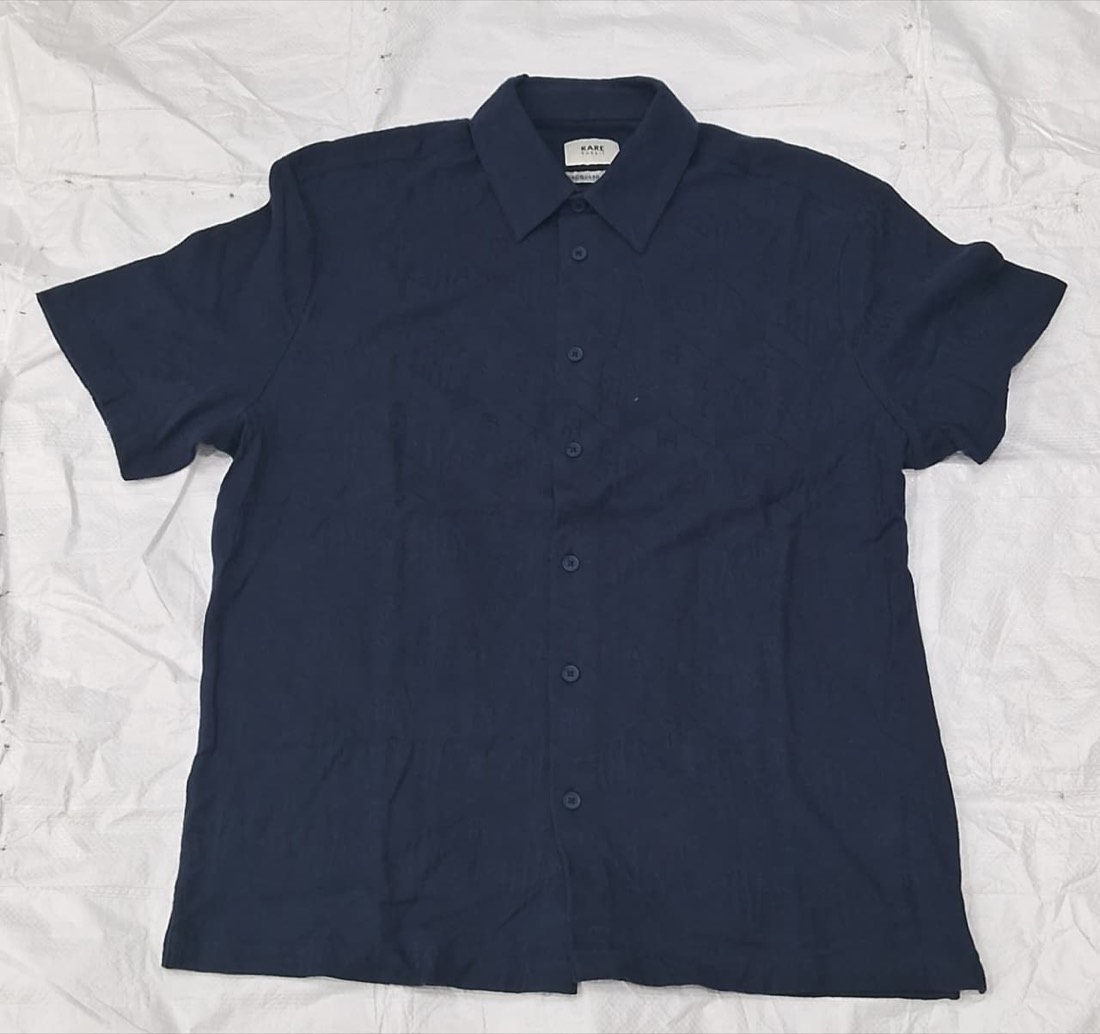
Navy short-sleeve shirt laid flat
08.b Navy — pair with stone
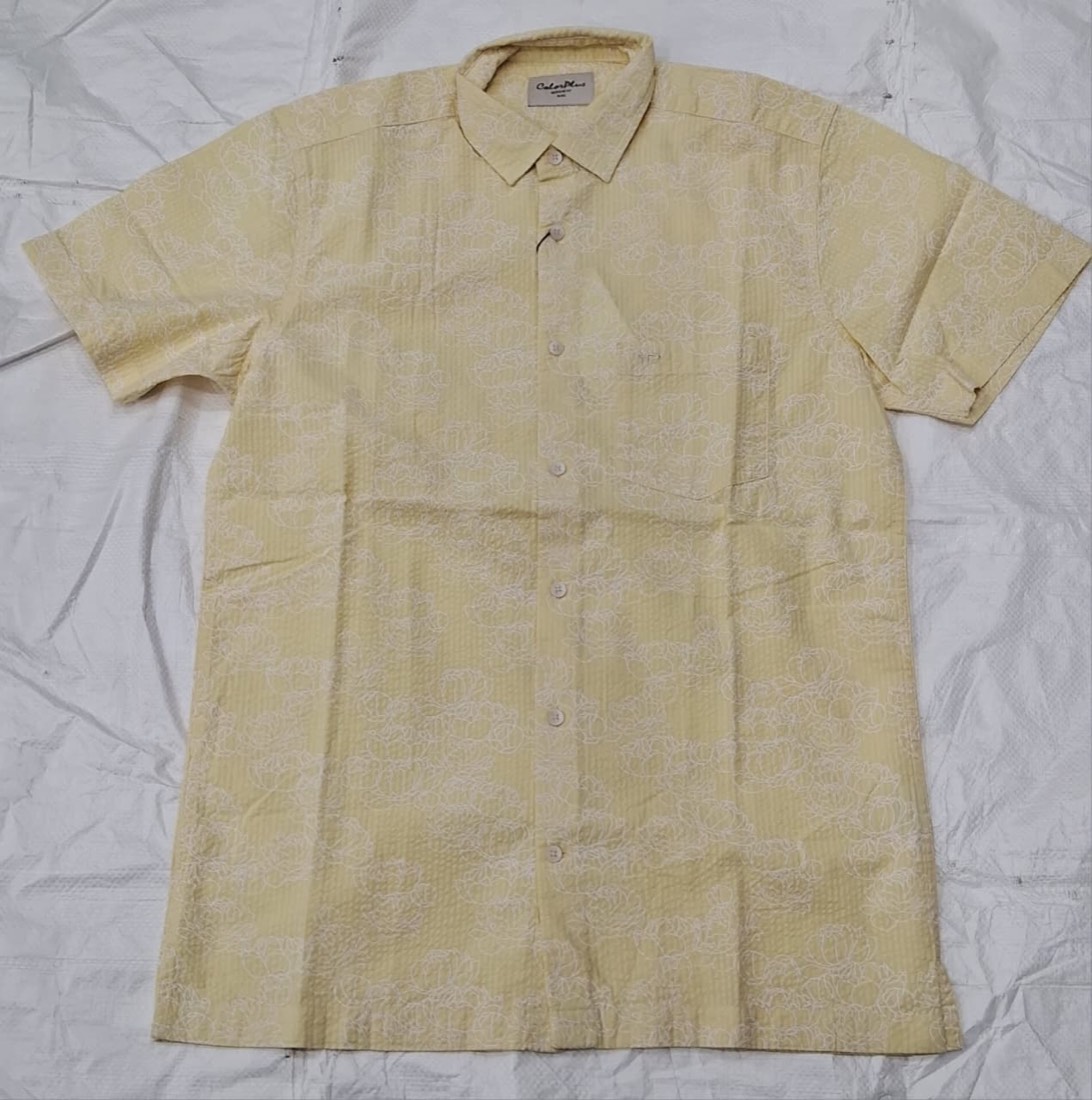
Pale yellow short-sleeve shirt laid flat
08.c Butter yellow — pair with grey or navy

Shirt & blazer coordination

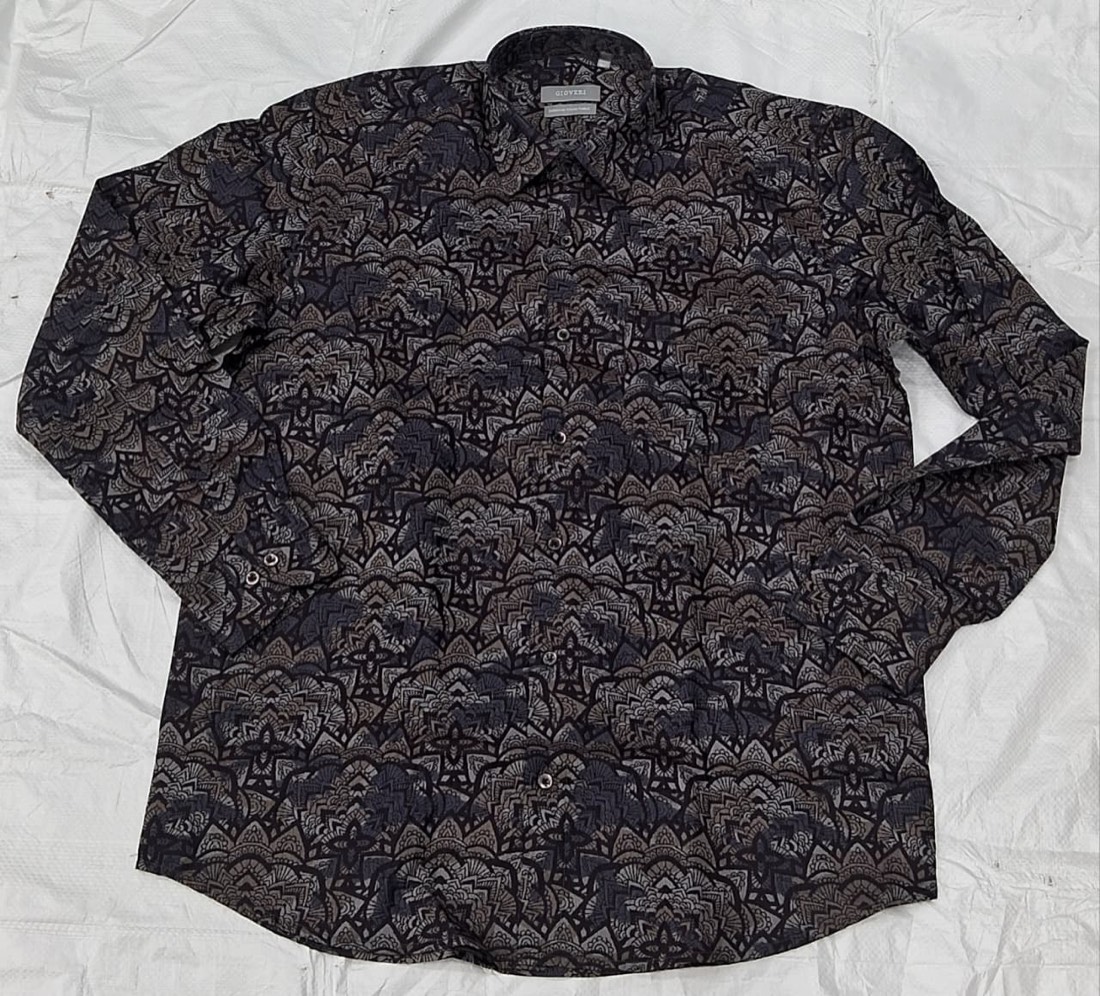
A blazer is more forgiving than a suit, and it welcomes more texture and pattern underneath. A plain navy blazer is the most versatile partner of all: it works with white, blue, pink, checks, and — for evenings — dark, subtly printed shirts.

If the blazer is patterned (a check or herringbone), choose a solid shirt or one with a much smaller pattern. If the shirt is patterned, keep the blazer plain. Make sure the shirt collar has enough structure to sit up under the blazer's lapels when worn open.

Recipe

  • BlazerNavy, grey or earth-tone
  • ShirtSolid with patterned blazers; pattern with plain blazers
  • EveningDark printed shirt under a plain dark blazer
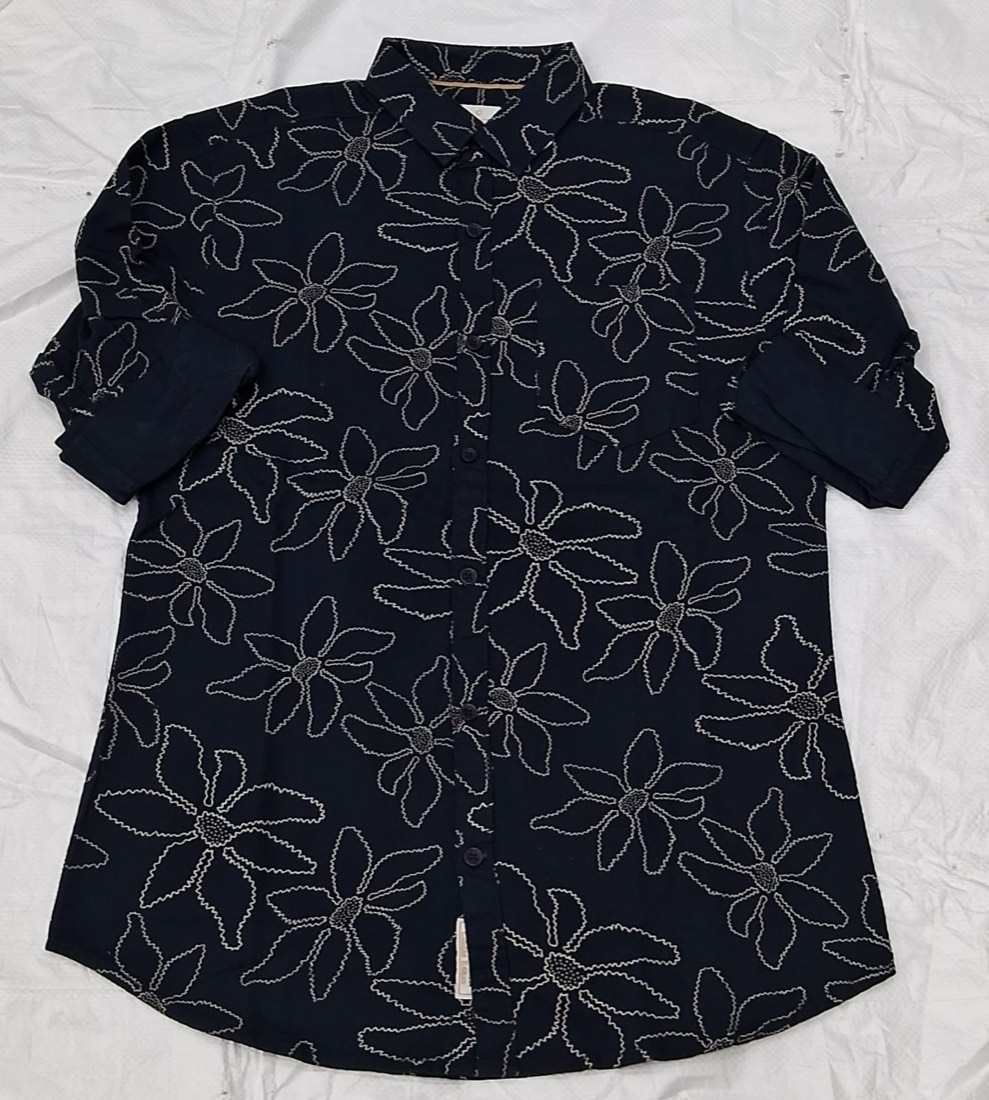
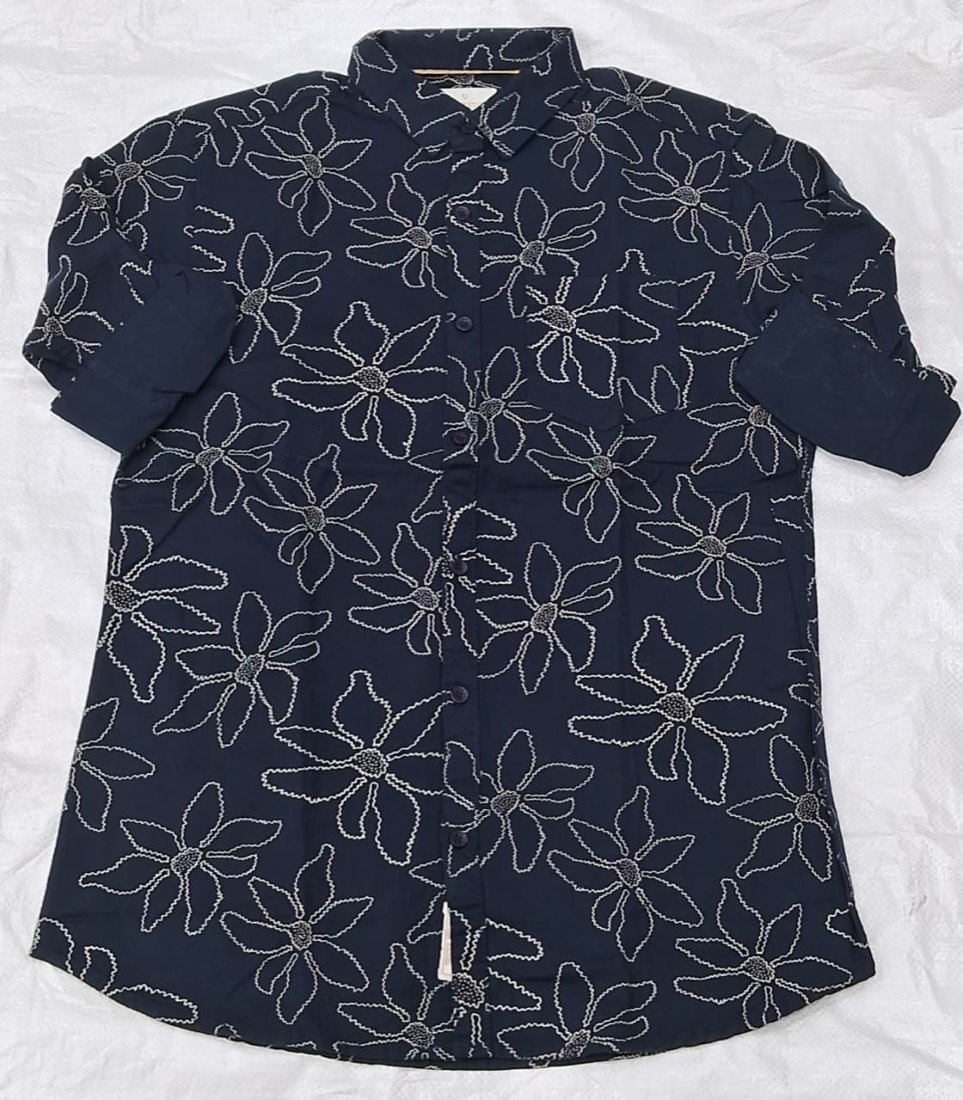
Navy shirt with a cream outline floral print laid flat
09.a Navy floral, evening
Navy shirt with an outline leaf print laid flat
09.b Navy outline print

Tie & collar coordination

The tie knot and the collar should be in proportion. Narrow collars (point, classic) suit slimmer knots; wide collars (spread, cutaway) suit fuller knots. A small knot lost in a wide spread looks undersized; a large knot squeezed into a narrow point collar forces the points apart.

Match tie width to the scale of your lapels and your build, and let pattern scales differ between shirt and tie. A striped shirt pairs well with a solid tie or a tie with a larger pattern; a checked shirt pairs well with a solid or knitted tie.

Pairings

  • PointFour-in-hand; slimmer ties
  • ClassicFour-in-hand or half-Windsor
  • Semi-spreadHalf-Windsor; or open collar
  • SpreadHalf-Windsor or Windsor
  • CutawayWindsor; wider ties
  • Button-downFour-in-hand, knitted ties, or no tie

Full details in the Collar Guide →

Every room has its shirt.

Read the long-form essays in the Fashion Journal, or revisit the shirt families in the directory.